While at Focus Numerque, I noticed that they had posted images of the Nikon V2, the camera that fans of the system (if there are any) hoped would bring it up a notch and into better fighting shape against the Sony RX100.
Those fans are going to be disappointed. The V2 has its IQ ass handed to it by the RX100, its only sensor format competitor. Yes, IQ isn't everything, but the images aren't even a competition. Combined with the fact that the RX100 drops to ISO-50, there is no comparison. The V1/J1 were made pathetically obsolete by the RX100 and the V2 does nothing to alleviate that situation.
Friday, November 30, 2012
GH3 and E-M5 Compared... Finally.
Focus Numerique, a website that I like more with every upgrade to Google Translate, has posted its comparison shots taken with the GH3. They are near-as-damnit exactly what we were expecting for a camera based on the Sony sensor inside the E-M5.
The images posted are OOC JPEGs, but they also provide RAW files which can be easily and quickly dropped in Raw Therapee for deeper analysis. As expected, the JPEGs give the edge to Olympus at everything above ISO-800. The Oly manages to extract better everything from the data, but the extreme voodoo being applied sometimes causes images that look inferior to the GH3, so it isn't a complete a win for Olympus.
Moreover, once we view the files in RawTherapee, the differences become, at least as far as I can tell, academic. I think that the Olympus is still doing better, but even in RAW, the GH3 seems to be superior in some areas of the shots. I think that is all beside the point. I think that the real point is that the GH3's sensor is not a downgrade from the E-M5, which I, and many other people, were worried was going to be the case. Aside from the GH1 and to a lesser degree the GH2, Panasonic's cameras always had inferior image quality to Olympus' implementations of the same sensors, and both of them were significantly inferior to Sony's sensors.
Aside from the IBIS, the GH3 is lacking nothing in comparison to the E-M5 and brings many more goodies to the table. While better images than the Oly would have been some excellent icing on the cake, I can't be anything but satisfied with these results.
The images posted are OOC JPEGs, but they also provide RAW files which can be easily and quickly dropped in Raw Therapee for deeper analysis. As expected, the JPEGs give the edge to Olympus at everything above ISO-800. The Oly manages to extract better everything from the data, but the extreme voodoo being applied sometimes causes images that look inferior to the GH3, so it isn't a complete a win for Olympus.Moreover, once we view the files in RawTherapee, the differences become, at least as far as I can tell, academic. I think that the Olympus is still doing better, but even in RAW, the GH3 seems to be superior in some areas of the shots. I think that is all beside the point. I think that the real point is that the GH3's sensor is not a downgrade from the E-M5, which I, and many other people, were worried was going to be the case. Aside from the GH1 and to a lesser degree the GH2, Panasonic's cameras always had inferior image quality to Olympus' implementations of the same sensors, and both of them were significantly inferior to Sony's sensors.
Aside from the IBIS, the GH3 is lacking nothing in comparison to the E-M5 and brings many more goodies to the table. While better images than the Oly would have been some excellent icing on the cake, I can't be anything but satisfied with these results.
Tuesday, November 27, 2012
Woo Ha! DPReview Posts Sony RX1 Studio Shots (RAW Included)
DPReview has gone and posted its studio comparison of the new Sony RX1. As is expected with Sony cameras, the JPEGs are awful, with aggressive noise reduction and smeared details even at low-ISO. But who cares! It's the RAW that everyone wants to see, and they are... whelming.
Obviously, this is a studio comparison under studio lights, so we're only able to glean very specific things about the cameras performance. That said, the lens doesn't perform as well as I was hoping. Granted, it is a 35mm lens being compared to cameras that all sport 85mm lenses, which are always sharper. The field shots that I've seen reveal a high-quality 35mm piece of glass. I think that my expectations were set a bit too high.
The sensor is more than up to snuff. It outperforms the Sony A99, which is suffering the usual hit to performance caused by its SLT mirror. Of interest, considering Sony's boasting about this being the best sensor that they have ever made, is that the D600 outperforms it. It's such a small difference as to make no real difference, but it is noticeable on the pixel level, and by ISO-12,800, color is a bit better in the Nikon shots.
Unfortunately, they mention some issues with the autofocus. They say that it aligns well with the current crop of NEX cameras, which is good, but for nearly $3,000, I was expecting an upgrade. As far as I know, almost everyone is working with pre-release cameras, so the AF may speed up. I certainly hope it does, because having a camera that is excellent in low-light but has AF that falls on its face in the same environment is brutally disappointing. All one has to do to experience this problem is look to the Fuji X Pro 1.
I am going to be super-critical of the RX1 going into the future because while I am a huge fan of the camera and will buy it as soon as my budget allows, the price that Sony is charging for its accessories sets my teeth on edge. It's the kind of behavior that Nikon and Canon exhibit. Sony is fighting for market share. They shouldn't be pulling this garbage.
Obviously, this is a studio comparison under studio lights, so we're only able to glean very specific things about the cameras performance. That said, the lens doesn't perform as well as I was hoping. Granted, it is a 35mm lens being compared to cameras that all sport 85mm lenses, which are always sharper. The field shots that I've seen reveal a high-quality 35mm piece of glass. I think that my expectations were set a bit too high.
The sensor is more than up to snuff. It outperforms the Sony A99, which is suffering the usual hit to performance caused by its SLT mirror. Of interest, considering Sony's boasting about this being the best sensor that they have ever made, is that the D600 outperforms it. It's such a small difference as to make no real difference, but it is noticeable on the pixel level, and by ISO-12,800, color is a bit better in the Nikon shots.
Unfortunately, they mention some issues with the autofocus. They say that it aligns well with the current crop of NEX cameras, which is good, but for nearly $3,000, I was expecting an upgrade. As far as I know, almost everyone is working with pre-release cameras, so the AF may speed up. I certainly hope it does, because having a camera that is excellent in low-light but has AF that falls on its face in the same environment is brutally disappointing. All one has to do to experience this problem is look to the Fuji X Pro 1.
I am going to be super-critical of the RX1 going into the future because while I am a huge fan of the camera and will buy it as soon as my budget allows, the price that Sony is charging for its accessories sets my teeth on edge. It's the kind of behavior that Nikon and Canon exhibit. Sony is fighting for market share. They shouldn't be pulling this garbage.
Sunday, November 25, 2012
Steve Huff First Out The Gate With A Sony RX1 Review
I'm not sure how I missed this, but whatev's. Steve Huff, the man of none too few adjectives, has piled praise upon the RX1.
We already knew that Steve loved the RX1. He loved his short time with the camera earlier this year. He loved the very concept of the camera. Indeed, after his high praise, it appears that the RX1 is destined to become his go-to camera.
I can't help but be excited about the RX1 as well. It's far beyond my current budget, especially since I want to buy the Olympus 75mm and Voigtlander 25mm within the next three or four months. That does quite a bit to kill one's budget for camera gear. Still, the nanosecond I can afford the camera, I can see few reasons to prevent myself from totally and completely splurging.
Steve's work-up includes a expansive set of photos showing off how fantastic the included lens is. It seems quite sharp even wide-open, which puts it among the very best 35mm lenses available. This is wonderful news, since Canon, Nikon, and Sony alike all have pretty piss-poor examples of the classic lens in their systems.
And we cannot forget that the RX1 is completely unique. The only other camera out there that will achieve similar results in a similarly-sized body is Leica. Every other full-frame camera is large and sporting a focal plane shutter. The Fuji X Pro 1 may provide similar ISO performance, and the E-M5 may have faster lenses, but neither of them can produce the subtle and dreamy gradations of bokeh that a FF camera will produce.
Steve says that a noise comparison is incoming, but he did a quick comparison with the Leica Monocrom (which is just laughably overpriced), and the lens is right on par. Obviously, the Monocrom is sharper, but for the same reason that the Sigma Foveon is sharper: every photosite is a pixel. It is an illustrious beginning to what will undoubtedly become a seminal camera.
We already knew that Steve loved the RX1. He loved his short time with the camera earlier this year. He loved the very concept of the camera. Indeed, after his high praise, it appears that the RX1 is destined to become his go-to camera.
I can't help but be excited about the RX1 as well. It's far beyond my current budget, especially since I want to buy the Olympus 75mm and Voigtlander 25mm within the next three or four months. That does quite a bit to kill one's budget for camera gear. Still, the nanosecond I can afford the camera, I can see few reasons to prevent myself from totally and completely splurging.Steve's work-up includes a expansive set of photos showing off how fantastic the included lens is. It seems quite sharp even wide-open, which puts it among the very best 35mm lenses available. This is wonderful news, since Canon, Nikon, and Sony alike all have pretty piss-poor examples of the classic lens in their systems.
And we cannot forget that the RX1 is completely unique. The only other camera out there that will achieve similar results in a similarly-sized body is Leica. Every other full-frame camera is large and sporting a focal plane shutter. The Fuji X Pro 1 may provide similar ISO performance, and the E-M5 may have faster lenses, but neither of them can produce the subtle and dreamy gradations of bokeh that a FF camera will produce.
Steve says that a noise comparison is incoming, but he did a quick comparison with the Leica Monocrom (which is just laughably overpriced), and the lens is right on par. Obviously, the Monocrom is sharper, but for the same reason that the Sigma Foveon is sharper: every photosite is a pixel. It is an illustrious beginning to what will undoubtedly become a seminal camera.
Saturday, November 24, 2012
How The Hell Did Having No AA Filter Become THE Feature To Have?
I must express total confusion as to how having no AA filter became the de rigeur feature for digital camera to have. Both of Olympus' new cameras, the Mini and Lite, have none. The new Pentax K5-II, none. The Nikon D800E, goin' au naturale.
I'm confused by this because in the grand scheme of camera features that I want, no-AA filter is WAY down the list. I want more media choices, faster write times, better lenses, longer battery life, etc. I'm not even thinking about the sensor, since much of what the sensor does is out of the control of the company making the camera. All I'm thinking about are elements that can easily be bolted on from extant technology and features.
Like for Olympus, I want an adapter that lets me use the damned 4/3 lenses! They don't even need to make a new set of lenses! Just do what Sony did. But instead of that, Oly has given us... no AA filter? W the F?
The lack of AA filter does seem to increase the amount of light hitting the sensor, which is great. The upcoming Sony A99 is rumored to have no filter, and it will need it. The SLT mirror takes a big whack out of a camera's ISO performance. It also causes some softness, which will act like an AA filter. And for smaller sensors like those in 4/3, any ISO increase is desirable.
But again, what about the other features!? Why is everyone talking about the lack of AA filters as though it is the next thing from Apple? How in the world did this become the biggest point of discussion?
I think that it is a conspiracy to deflect our attention from other, more useful features that camera companies don't want us to have. It probably has something to do with the upcoming Mayan Apocalypse Yes. That's it. Camera companies are actually run by Mayans! It's not the end of the world, it is the rise of the Mayans! They're coming back and they are using our cameras to do it!
I'm confused by this because in the grand scheme of camera features that I want, no-AA filter is WAY down the list. I want more media choices, faster write times, better lenses, longer battery life, etc. I'm not even thinking about the sensor, since much of what the sensor does is out of the control of the company making the camera. All I'm thinking about are elements that can easily be bolted on from extant technology and features.
Like for Olympus, I want an adapter that lets me use the damned 4/3 lenses! They don't even need to make a new set of lenses! Just do what Sony did. But instead of that, Oly has given us... no AA filter? W the F?
But again, what about the other features!? Why is everyone talking about the lack of AA filters as though it is the next thing from Apple? How in the world did this become the biggest point of discussion?
I think that it is a conspiracy to deflect our attention from other, more useful features that camera companies don't want us to have. It probably has something to do with the upcoming Mayan Apocalypse Yes. That's it. Camera companies are actually run by Mayans! It's not the end of the world, it is the rise of the Mayans! They're coming back and they are using our cameras to do it!
Wednesday, November 21, 2012
Olympus 17mm Review Confirms What We All Knew
Lenstip has produced the first quantifiable review of the new 17mm Olympus and it is exactly what we expected: overpriced and underperforming. Actually, the data exceed the subjective tests in condemning the lens. Distortion is as high as I predicted, hitting nearly 6%. Vignetting is not extreme, but it's nowhere near good. Chromatic aberrations are terrible. Basically, everything is far worse than the 20mm. Even bokeh on the 20mm is better, although that's subjective.
Only a maniac would buy this lens.
Around Providence
Just a series of photos I shot while wandering around Providence, Rhode Island for a couple of hours.
![]() |
| The Rhode Island Statehouse. |
![]() |
| Another shot of the Rhode Island Statehouse. |
![]() |
| Davol Square at night. |
![]() |
| The oil tanks on the Providence waterfront. |
![]() |
| The Providence power plant. |
![]() |
| A large expanse of land left behind after RT 195 was relocated. |
![]() |
| At least the sidewalks are well-maintained. |
![]() |
| I love doorway graffiti. |
![]() |
| Providence has a lot of churches. |
![]() |
| Yeah. Fuck the post office. |
![]() |
| Abandoned storefronts get covered quickly. |
![]() |
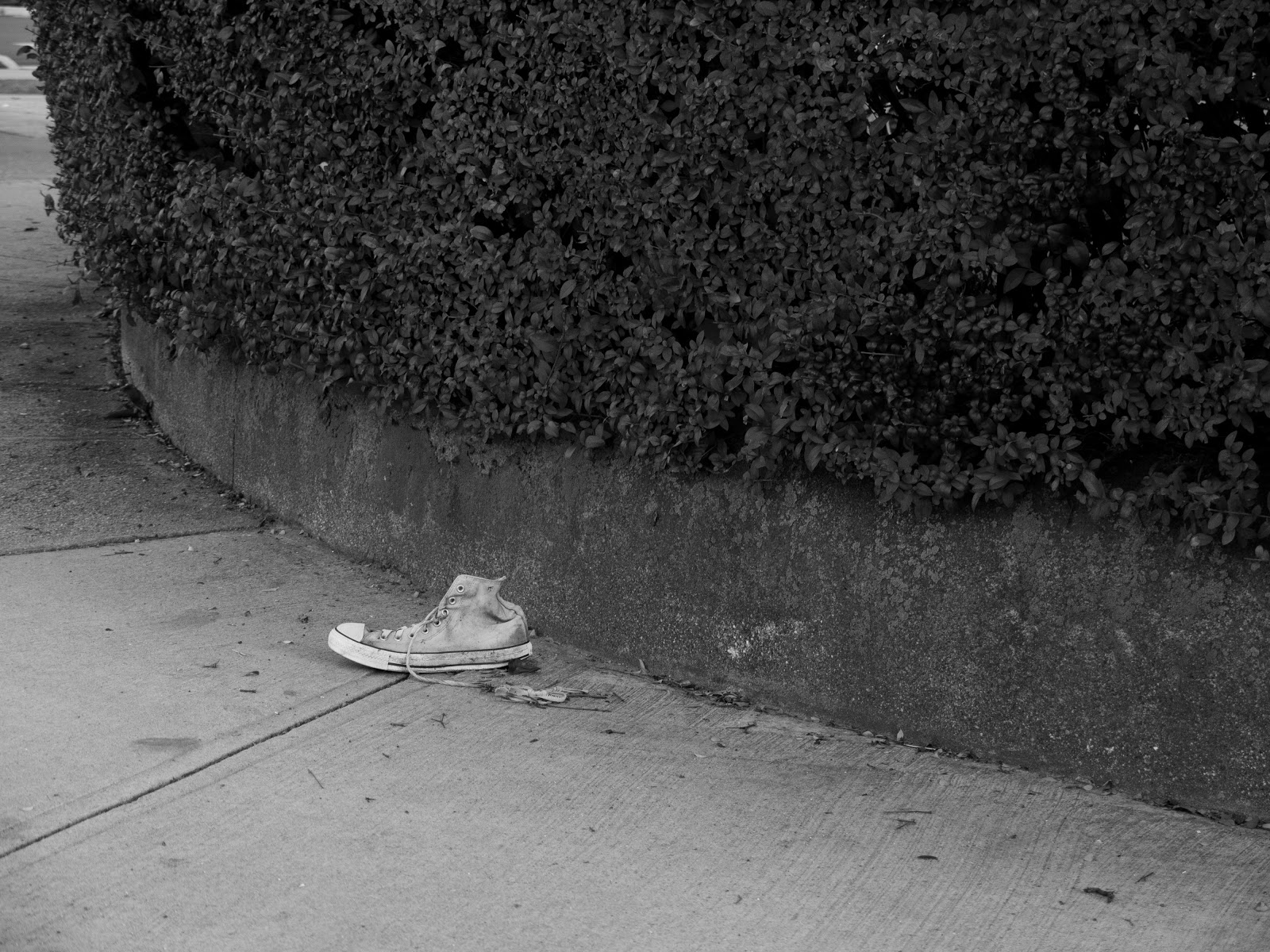
| A poor, orphaned shoe on the sidewalk. I hope it doesn't indicate a murder or something. |
Subscribe to:
Posts (Atom)