Showing posts with label business. Show all posts
Saturday, June 28, 2014
Apple One-Ups Its Final Cut X Failure; Completely Abandons Aperture
I don't own a Mac. I don't like Apple that much. In fact, I kinda' sorta' hate Apple. Not the Macolytes or iPhone fans or anything; I hate Apple itself.
One thing I don't hate, though, is competition. I love competition because it prevents companies from dragging progress down. When a large company dominates a market, it becomes difficult for smaller companies to succeed. Basically, the largest animal is eating all of the food that the smaller animals might use to grow. And since large companies are usually run by greedy nitwits, progress grinds to a halt.
Let's look at Adobe, another greedy company run by nitwits. They have released the near-universally hated Creative Cloud. With this, it is impossible to actually buy their software. You can only lease it. They are trying to say that it is intended to be beneficial to users, but everyone knows that this is a lie. It is intended to try to stop pirates... which it has failed to do. I can go pirate Adobe Photoshop CC right now.
So, as with so many (all?) attempts to stop piracy, all they have succeeded in doing is making life more difficult for their legitimate users.
You will notice a peculiar omission from their Creative Cloud, though:
Lightroom.
Odd, don't you think? If Creative Cloud is so awesome for users, why isn't Adobe forcing Lightroom users into it? You can get it. In fact, if you go to Adobe's website and try to buy Lightroom, they only give you the option of ordering it in a monthly lease package with a minimum one-year commitment for $120.
But, and this is a huge but, I can still go to Amazon and buy it outright and for the rest of time for $135.
Why give me the option at all? I can no longer buy Photoshop, or Illustrator, or Premiere. Why is Lightroom exempt from this tyranny?
Because of competition, that's why. Unlike so many of the markets in which Adobe plays, the photo processing market has a large number of options, with all of them fantastic in their own ways. Capture One, Bibble, DxO, and the quite usable open source RawTherapee are all alternatives to Adobe's Lightroom. Moreover, Lightroom has seen more and faster development than all of their other programs. Competition has forced Adobe to work.
So it is with a heavy heart that I report that the competition in that market has grown to be too much for an old stand-by. Apple is leaving the professional photo processing market and pulling the plug on Aperture. This is a big problem for me because Adobe will use any excuse they can find to stop working, charge more, and screw its customers. And since Lightroom is my application of choice, I am on tenuous foundations. Adobe could suddenly decide to pull a Creative Cloud on Lightroom, and I would either be forced to tag along or make the troublesome transition to another program. Neither option is very nice.
So the loss of Aperture is bad for Aperture users, but it is also bad for Adobe users. Aperture users have had the rug pulled out entirely from underneath them, but now our rug is looking like it might move at any moment. We need constant, intense, brutal competition to keep these companies in place, and the loss of any player in the game is going to be felt by all involved. I am very sad that Aperture is gone.
Maybe it's time to start donating to RawTherapee.
Friday, February 7, 2014
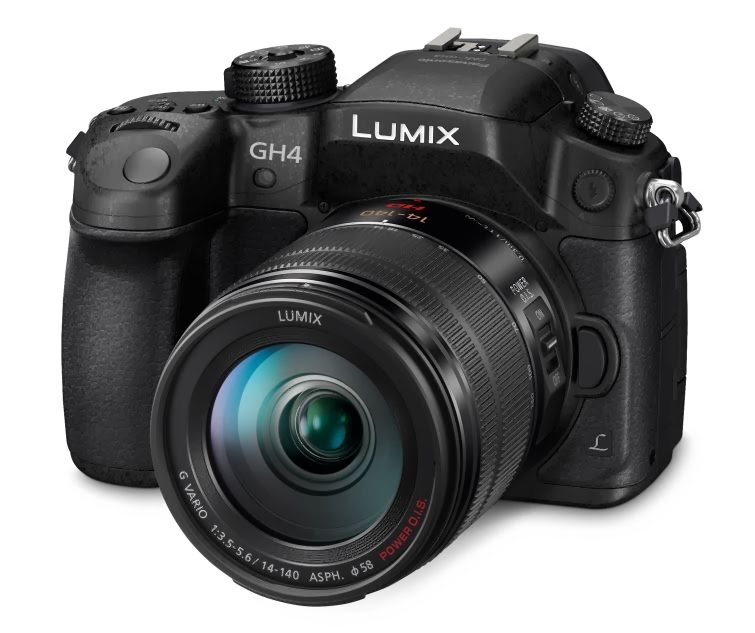
The GH4 Saves Panasonic From Itself
It's no secret that neither Olympus nor Panasonic, the two progenitors of Micro 4/3, are doing well. Damn poorly is probably a better way of describing it. Obviously, neither company sells only cameras, and as such success or failure in the camera market can only go so far in changing the fortunes of the broader companies. That doesn't mean, though, that their cameras aren't a very interesting window into the companies and their problems.
Both Olympus and Panasonic are "old world" Japanese companies. Their executive structure is very Japanese, their culture is very Japanese, and their product philosophy is very Japanese. Sony was like that, too, which is why they brought in Howard Stringer, a Brit, in 2009 in an attempt to de-Japanify the company to encourage a turnaround. Obviously, that hasn't happened.
Olympus actually tried the same thing when they hired another Brit, Michael Woodford, to run the company. Not only did he, by his own description, clash with Olympus's corporate culture, he uncovered a movie-worthy, multi-billion-dollar corruption cover-up!
Amazingly, Olympus has been doing the best of the two. Panasonic recently saw its stock price go up after their cost-cutting efforts saw some rather impressive success, but aside from that, the company has been a shit-show.
Long story short, Panasonic and Olympus haven't been terribly competitive. And as can be seen in Panasonic's intransigence in its other markets and Olympus's twenty-year accounting scandal, the cause of this poor performance is arrogance. Pure, unadulterated arrogance.
I think that the arrogance was fueled by the fact that the companies were, in many ways, making good products. No one was buying Panasonic's televisions, but they were good televisions. No one was buying the Olympus PEN series, but they were pretty good little cameras. Simply making a good product isn't the same as being competitive, though, and that is something that these blasted companies cannot get through their heads.
They need to create interesting products. Exciting products. Inventive products. Products that are different from every other company and are cheaper than every other company. Instead, both Panasonic and Olympus try to be Canon, just as every cell phone company tries to be Apple.
It's hard to decide which company has been the biggest disappointment. Olympus has refused to redesign their 4/3 lenses and bring them to the Micro 4/3 market while Panasonic has produced an entire slew of overpriced and under-specced lenses and cameras. And both companies release lenses that feature zero optical correction and as such have distortion that could almost be classifiable as dubstep.
In the end, it's an academic question. Micro 4/3 is exciting because of other companies. Blackmagic and SLR Magic are producing exciting products. Metabones Speedbooster will put a nearly limitless selection of glass at our disposal. The stuff coming out of the two original companies has been constantly disappointing.
The GH4 does not appear to be a disappointment. It is a groundbreaking camera. It puts true 4K recording ability into the sub-$2,000 market and features pro-level features that could put GH4s on movie sets. It's that good. If the photographic abilities are good, this becomes the 4/3 camera that the GH3 should have been.
It will also stand as an example of what other companies should be doing. I'm looking squarely at Nikon and Canon. With the processing power in their cameras, their video quality should be far higher than it is now. The only Nikon camera with decent video quality for the price is the 1-Series, which is awful in most other ways.
Importantly, the GH4 is a unique product! For that reason, it is impossible to say that it is overpriced. Is Panasonic seeing ridiculous profits from the camera? How should I know! There are no other products on the market that do what the Panasonic does for its price. The next cheapest 4K camera, the Blackmagic 4K, costs over twice the price and is a pure video camera. The GH4 is unique, and at $1,999, it is impressive.
I speculated about whether it was going to be a global shutter or not, and we now have our answer: no. While that's mildly disappointing, it's not surprising. Global shutters are very difficult to design and implement.
Panasonic has managed to increase sensor read-out by 50%, and the video will use a 4K crop of the sensor, which makes the video area very similar to the Blackmagic Cinema camera, which is the GH4's primary competition. That center crop means that actual readout is going to be very quick since, I'm assuming, they don't need to dump the unused pixels. They can simply dump the pixels being used and reset the sensor more quickly. Rolling shutter won't be non-existent, but I would imagine that it won't be bad.
The GH4 is an important product because it finally brings some competition to Blackmagic. I'm not saying the BM needed competition. Lord knows, they've been competing like crazy without anyone else. Still, having two companies mix it up is better than one.
If you are an average user, it's important to understand what the GH4 is not. It is not the Micro 4/3 camera to own. This is not the one camera to rule them all. This is the camera to own if video and video quality is of significant importance to you. If you will use it primarily for photographic applications, it is much too expensive. A 4/3 sensor will never provide $2,000 worth of technology for photography alone. The E-M1 costs $1,500 and is already overpriced, which is likely why no one is selling it for sticker.
Video is another banana completely. For video, sensor size is of much lower importance. Very rarely is the shallow depth of field allowable from full-format cameras ever used in video. It's fun to have, but it is very much a niche tool. Indeed, the smaller sensor provides a large number of distinct advantages. $2,000 for that sensor in an otherwise robust package is a reasonable price to say the least.
I cannot wait to get my hands on a GH4. $2,000 is too much for my pockets right now (my GH2 will have to serve its master for a bit longer) but used cameras will hit the market eventually. And when they do, I'm going to make a 4K film, simply because I can.
On a side not, EOSHD recently complained about how companies like Olympus seem almost psychotically averse to including video in their products.
This is an example of that arrogance that I mentioned earlier. It's not that Olympus doesn't want to be good at video. It's that they want to be known for video when they choose to be known for video. Then, they can try to squeeze money from it. He mentions Canon without making the connection.
Canon released the 5D Mark II which blew the world away with decent video. The Mark III comes out with identical video, and Canon was furious when Magic Lantern came out, going so far as to threaten the group with a lawsuit. Panasonic did the same thing with the GH3. They locked out hackers, crippled aspects of its design, and tried to sell the AF100 for $4,500.
If these companies can't squeeze money from you, they don't want you having it, logic, reason, and value be damned!
Canon can afford to be that arrogant, at least for now, because of their size and reach. Olympus and Panasonic cannot, cannot, afford to be that arrogant, and the fact that they are trying that reveals a corporate obliviousness that enters the realm of pathological.
If nothing else, the GH4 signals a crack in that pathology. That is a good thing. Of course, it could also just be a fluke. Because lord knows, neither the GH1 nor GH2 became legends because of Panasonic's doing.
Both Olympus and Panasonic are "old world" Japanese companies. Their executive structure is very Japanese, their culture is very Japanese, and their product philosophy is very Japanese. Sony was like that, too, which is why they brought in Howard Stringer, a Brit, in 2009 in an attempt to de-Japanify the company to encourage a turnaround. Obviously, that hasn't happened.
Olympus actually tried the same thing when they hired another Brit, Michael Woodford, to run the company. Not only did he, by his own description, clash with Olympus's corporate culture, he uncovered a movie-worthy, multi-billion-dollar corruption cover-up!
Amazingly, Olympus has been doing the best of the two. Panasonic recently saw its stock price go up after their cost-cutting efforts saw some rather impressive success, but aside from that, the company has been a shit-show.
Long story short, Panasonic and Olympus haven't been terribly competitive. And as can be seen in Panasonic's intransigence in its other markets and Olympus's twenty-year accounting scandal, the cause of this poor performance is arrogance. Pure, unadulterated arrogance.
I think that the arrogance was fueled by the fact that the companies were, in many ways, making good products. No one was buying Panasonic's televisions, but they were good televisions. No one was buying the Olympus PEN series, but they were pretty good little cameras. Simply making a good product isn't the same as being competitive, though, and that is something that these blasted companies cannot get through their heads.
They need to create interesting products. Exciting products. Inventive products. Products that are different from every other company and are cheaper than every other company. Instead, both Panasonic and Olympus try to be Canon, just as every cell phone company tries to be Apple.
It's hard to decide which company has been the biggest disappointment. Olympus has refused to redesign their 4/3 lenses and bring them to the Micro 4/3 market while Panasonic has produced an entire slew of overpriced and under-specced lenses and cameras. And both companies release lenses that feature zero optical correction and as such have distortion that could almost be classifiable as dubstep.
In the end, it's an academic question. Micro 4/3 is exciting because of other companies. Blackmagic and SLR Magic are producing exciting products. Metabones Speedbooster will put a nearly limitless selection of glass at our disposal. The stuff coming out of the two original companies has been constantly disappointing.
The GH4 does not appear to be a disappointment. It is a groundbreaking camera. It puts true 4K recording ability into the sub-$2,000 market and features pro-level features that could put GH4s on movie sets. It's that good. If the photographic abilities are good, this becomes the 4/3 camera that the GH3 should have been.
It will also stand as an example of what other companies should be doing. I'm looking squarely at Nikon and Canon. With the processing power in their cameras, their video quality should be far higher than it is now. The only Nikon camera with decent video quality for the price is the 1-Series, which is awful in most other ways.
Importantly, the GH4 is a unique product! For that reason, it is impossible to say that it is overpriced. Is Panasonic seeing ridiculous profits from the camera? How should I know! There are no other products on the market that do what the Panasonic does for its price. The next cheapest 4K camera, the Blackmagic 4K, costs over twice the price and is a pure video camera. The GH4 is unique, and at $1,999, it is impressive.
I speculated about whether it was going to be a global shutter or not, and we now have our answer: no. While that's mildly disappointing, it's not surprising. Global shutters are very difficult to design and implement.
Panasonic has managed to increase sensor read-out by 50%, and the video will use a 4K crop of the sensor, which makes the video area very similar to the Blackmagic Cinema camera, which is the GH4's primary competition. That center crop means that actual readout is going to be very quick since, I'm assuming, they don't need to dump the unused pixels. They can simply dump the pixels being used and reset the sensor more quickly. Rolling shutter won't be non-existent, but I would imagine that it won't be bad.
The GH4 is an important product because it finally brings some competition to Blackmagic. I'm not saying the BM needed competition. Lord knows, they've been competing like crazy without anyone else. Still, having two companies mix it up is better than one.
If you are an average user, it's important to understand what the GH4 is not. It is not the Micro 4/3 camera to own. This is not the one camera to rule them all. This is the camera to own if video and video quality is of significant importance to you. If you will use it primarily for photographic applications, it is much too expensive. A 4/3 sensor will never provide $2,000 worth of technology for photography alone. The E-M1 costs $1,500 and is already overpriced, which is likely why no one is selling it for sticker.
Video is another banana completely. For video, sensor size is of much lower importance. Very rarely is the shallow depth of field allowable from full-format cameras ever used in video. It's fun to have, but it is very much a niche tool. Indeed, the smaller sensor provides a large number of distinct advantages. $2,000 for that sensor in an otherwise robust package is a reasonable price to say the least.
I cannot wait to get my hands on a GH4. $2,000 is too much for my pockets right now (my GH2 will have to serve its master for a bit longer) but used cameras will hit the market eventually. And when they do, I'm going to make a 4K film, simply because I can.
---
On a side not, EOSHD recently complained about how companies like Olympus seem almost psychotically averse to including video in their products.
Last year Olympus gave what I thought to be a very strange reason for their video modes being a pale imitation of Panasonic’s.
Olympus don’t want to be too good at video, in-case their cameras become known for it. They want to be associated with photography professionals and not cat-video YouTube uploaders, just in case they might get popular with filmmakers and sell us lots of cameras.
I can really sympathise with Olympus, it must be a terrible prospect to have better image quality on your cameras and higher sales. Canon also recently became extremely worried that video might improve on their DSLRs (thanks to Magic Lantern) with terrible consequences. The nightmare scenario of offering their customers better video absolutely scared the life out of one rep who said the threat of better video would be dealt with by their lawyers!
Joking aside (or I am?!) why doesn’t Olympus want to be known for video? From the perspective of Olympus looking at the video features and their users, it might look like video users just sit around uploading clips of kittens to YouTube and editing in iMovie. (Maybe that’s true!?) But if we’re pointing the finger here, I’d say leave off the pop-art filter and HDR images, you photographers! There are as many casual stills shooters as there are video shooters and the 1500 euro E-M1 should not compromise one bit for any of them. Put the gimmicks in the lower end stuff instead.
Indeed on the E-M1 photographers get a raft of serious features and improvements like a 1/8000 shutter and weather sealing and video users get some new funky special effects for their 1500 euros. If you press the left button whilst recording video the image echoes and then returns to normal. If you press the down button the image ghosts and leaves a trail. Case closed.
This is an example of that arrogance that I mentioned earlier. It's not that Olympus doesn't want to be good at video. It's that they want to be known for video when they choose to be known for video. Then, they can try to squeeze money from it. He mentions Canon without making the connection.
Canon released the 5D Mark II which blew the world away with decent video. The Mark III comes out with identical video, and Canon was furious when Magic Lantern came out, going so far as to threaten the group with a lawsuit. Panasonic did the same thing with the GH3. They locked out hackers, crippled aspects of its design, and tried to sell the AF100 for $4,500.
If these companies can't squeeze money from you, they don't want you having it, logic, reason, and value be damned!
Canon can afford to be that arrogant, at least for now, because of their size and reach. Olympus and Panasonic cannot, cannot, afford to be that arrogant, and the fact that they are trying that reveals a corporate obliviousness that enters the realm of pathological.
If nothing else, the GH4 signals a crack in that pathology. That is a good thing. Of course, it could also just be a fluke. Because lord knows, neither the GH1 nor GH2 became legends because of Panasonic's doing.
Monday, January 13, 2014
Will Olympus Disappear?
Every year, various financial publications love to put out link bait in the form of "dying companies" lists. You know the type. The headline is usually "X Companies Fated To Die in 2014," or "Which Companies Won't Be Around in 2015?"
Well, one company that's getting a lot of attention is Olympus. 24/7 Wall Street has put Ol' Oly on the chopping block for 2014, and aside from the Oly faithful who are screaming no, I find little to disagree with. Olympus is in bad shape.
This is heavily Olympus' fault, too. They have tried desperately to be a premium brand while what they sell can never be premium. A 4/3 crop sensor is never going to be adopted by wide swaths of the photographic world, especially those with significant budgets.
That should have been fine. The prices for the 4/3 sensor are much lower than full-frame sensors, and the prices for lenses are much lower as well. If Olympus had passed these prices on to consumers, I think that Micro 4/3 could have been the dominant crop system on the market, providing good enough image quality for a significantly reduced size and price.
Olympus hasn't done that, though. Panasonic hasn't done that. Indeed, Panasonic's recent 42.5mm lens for sixteen-hundred-fucking-dollars shows how deep the delusion runs. Panasonic's previous high-end lenses, the 12-35mm and the 35-100mm, only ever sold in volume when discounted.1 So instead of lowering prices to compete, they just keep charging ahead, confident for some unknown reason that their fortunes will turn around.
You know that definition of insanity, where you try the same thing repeatedly while expecting different results? Yeah. This isn't bloody quantum mechanics. It's camera sales.
The article at 24/7 Wall Street says that "Except for market leaders like Canon, Sony and Nikon, no one wants to be in the digital camera business anymore." That's only true because everyone wants to be Canon and Nikon! They all want to have the same robust customer base from which to squeeze money.
THAT'S NEVER GOING TO HAPPEN.
Canon and Nikon reached their dominance because of fundamental technological shifts in the camera market. First came the rise of autofocus, then finally, the killer blow for old-world companies: digital. The Japanese companies were perfectly situated to take advantage of the technological shift.
Unless Olympus has some technological shift up their sleeves, they will never, ever, ever, ever, ever, ever, ever, ever, achieve the success of Canon and Nikon.
So, not surprisingly, companies that are not trying to be the next Canon and Nikon are making waves. Fuji released its own 80mm-ish portrait lens for only $1,000. Sigma's Art line of lenses continues to upset the lens status quo. If your company is willing to actually compete, there is opportunity in the camera industry. Death only comes from following the leaders.
Panasonic is perhaps in better shape because they made waves. When the GH1 and GH2 came out, they were unique. They were cheap, compact cameras that produced video quality that met or exceeded cameras that were many times its price. If Blackmagic had not released its line of Cinema cameras, Panasonic would still be viable.
Olympus has nothing but the success of the E-M5 and the as-yet-unknown success of the E-M1. Panasonic had never relied on compact camera sales for their revenue as Olympus did. And even here, Olympus utterly failed to produce a response to the Sony RX100. Instead, Panasonic does! While I think the GM1 is a stupid camera, it is a genuine response to the RX100 that plays at least a bit to the strengths of the m4/3 system. What did Olympus produce? Yet another small-sensored, over-priced piece of crap.
An important point that many people are making is that a company does not need to have significant market share to be a success. That is true. It is also naive. In a highly competitive industry that requires engineers, research, and manufacturing, if a company does not have sizable revenues, they are inherently unstable. They could be stomped on by the leaders at any moment, and that's where Olympus sits: right under the feet of the leaders.
In the end, all of this is unfortunate. The E-M1 is a wonderful camera. It is fast and powerful. It is a great tool for producing images. Because in the end, that's what a camera does. It produces images. But when the market is so filled with excellent image-creating tools, Olympus needs to bring its A-game in every way possible. They aren't doing that. They're not even really bringing their A-game in any way.
This is a good time to mention something very important: while Olympus and Panasonic are weak and stupid, the Micro 4/3 market is not weak. It is becoming the system for low to mid-range video equipment, and the release of the Blackmagic cameras in m4/3 mount have all but solidified it as the choice for enthusiast, semi-pro, and pro videographers. The upcoming GH4 4K further excites the m4/3 market for video.
Seriously, if you are a videographer, go out and buy some m4/3 hardware immediately.
But for photography, m4/3 has some significant problems that its constituents are doing poorly at remedying. Olympus needs more lenses like its 75mm f/1.8, which is still its only exceptional lens. Olympus needs to ditch its absurd 4/3 lenses and stop pretending like they're going to do something with them. In all ways, Olympus needs to stop pussyfooting around, focus on a few things, break new ground, and do so at a price lower than everyone else. They need to disrupt the market.
Because they're currently the shortest person on the dance floor, and the other dancers all have big feet.
----
1: I am making that statement based on limited information. It could be wrong, but I suspect not.
Thursday, October 10, 2013
I Now Understand Those Who Shoot Leica
I have often made fun of Leica and Leica users. Their products are wildly overpriced and philosophically rooted in the photographic dark ages. That said, as time has gone on, I've begun to understand them more and more. Now, I'm not about to go out and buy Leica — that's likely (Leicaly?) never going to happen — but I am completely stopping my mockery.
In fairness to me, I mostly stopped mocking Leica some time ago. My reasoning for this was that Leica, price and all, was a way for truly serious photogs to differentiate themselves from the Best-Buy-shopping, APS-C shooting, photographic hoi-polloi. The rise of digital, and Instagram, and everything else that has resulted in the majority of photos ever taken having been taken in the past five years, has concomitantly caused a severe drop-off in the work required and the prestigiousness of photography as an art.
Fifty years ago, walk in to a county fair and only a few people had SLR cameras. Go now and half the damned crowd is rocking Nikon or Canon. It's very difficult to feel in the slightest bit special in the face of that. It's hard to feel as though you are doing something that others are not.
How absurdly elitist and pretentious! you may be yelling. And there is a degree of that going on, I'm sure. But who cares!? Of course there is! We all want to feel as though our chosen hobby is something a bit unique. We want to feel as though we're doing something that separates from the crowd enough to be a part of an identity. Otherwise, what the hell will one person have to talk about with another person when they are all doing and thinking the same damned thing?
Moreover, I have heard too many stories of photogs showing up for work with standard gear only to see palpable disappointment on the faces of their employers. This disappointment immediately disappears when the Leica or Hasselblad comes out. Pretentious? Yes. But it's also good business.
This is also the reason why I think that both medium format and Leica have seen huge sales increases in the past few years. Leica went from nearly dead to the best sales of its history. Hell, even wacky, scanning backs have seen sales increases every year for the past ten years!
The second reason for my ceasing Leica-hate, and the reason for this article, is that Leica is the only company out there that doesn't fuck around. No, Mamiya, Phase One, and Leaf aren't fuckin around either, but they are medium format companies aimed and high-end professionals. Of course they aren't fucking around. I'm talking about SLR companies and companies that cater to enthusiasts as well as professionals.
What do I mean by not fucking around. I mean that Leica doesn't release a product and immediately orphan it. Leica doesn't release crap lenses for high prices to protect their higher-end products, or in many cases not release lenses at all! Leica doesn't release crap anything. Leica's design and philosophy is simple and well-known. They never create a bad lens. They never create a bad product for their philosophy. Leica is always good.
You have to pay through the nose for it, yes, but it is always good. It is never bad. Leica's philosophy may not be compatible with what you want or need, but you must admit that vis-a-vis Leica and its history, its products are always good.
No other camera company is doing that. Canon, Nikon, Sony, Olympus, Panasonic, all of them fuck around to no end. They release MOUNDS of garbage: crap lenses, shitty cameras, stupid products; and even if they release a good product, like the EOS 7D or NEX-7, they abandon them! Fuji is the only other company that even comes close, which, again, is why I give them a pass for their failings.
An example that sticks in my mind because it is in the news is lenses for current mirrorless cameras. Digital cameras presented a new opportunity for camera companies: software correction. In camera, previously destructive things such as aberration, distortion, vignetting, and flare could be reduced via software tuned to the characteristics of a particular lens. Olympus and Panasonic have taken this philosophy and run like Forrest Gump with it.
On its face, this sounds great. A poor lens can be made to seem like a better lens. But as Panasonic and Olympus have proven, they take this ability and then try to charge the same amount for their lenses. Go to a website that measures raw distortion of the 12mm, the 12-35mm, the 35-100mm, or any other of their laughably overpriced pieces of shit. The distortion is mind-blowing. I'm talking 6%. Back in the days before software correction, a 6% distortion would be considered a broken lens.
But with software, these companies have completely abandoned fixing these problems via in-lens corrections. They now rely on software. If we received a discount on the lens price, then this would fine. But we don't. They create a shitty lens, hide the shit with software, and then try to charge full price for the lens.
No. Fuck you.
Leica would never do this. Leica would never correct in software. If someone ever even floated the idea, that engineer would be forced to commit seppuku.
Make no mistake, this is a conscious choice on the part of these companies to best rip you off. For example, there are two 12mm prime lenses for the Micro 4/3 system: the SLR Magic f/1.6 and the Olympus f/2.0. The SLR Magic has distortion of 1.26% and costs $500. The Olympus has distortion of 5.4% and costs $800! Moreover, the SLR Magic is nearly a full stop brighter. In fairness, the Olympus is sharper and does correct aberrations in-lens, but in the battle of optical quality, the SLR Magic wins... and does it for cheaper.
This makes me angry and it should make you angry. They are tricking you into buying something of lower-quality. Abandoning systems should make you angry because the value of a lens is at least partially dependent on how much I can sell it for in the future. Crap lenses should make you angry because if other lenses are much better, the value of my purchased lens will drop as better lenses are released. Why do you think Leica lenses frequently increase in value after they are released.
Because, again, Leica has never released a bad product.
So, after all is said and done, I would never buy Leica. I respect Leica and their history, and respect those dedicated enough to deal with the system, but I just could never buy it. They are incompatible with the way I shoot and what I want to shoot. But I will not longer hate on them and those who use them. They may be expensive, but they are also unique.
And how do you put a price on that?
Saturday, September 21, 2013
The Utter Uselessness of Camera Reviews
Some time ago I inveighed against Photography Blog for their review of the Sigmas SD-1. It was so horrible that the bias of the magazine didn't just reveal itself between the lines; the article screamed it out for the world to see. But this problem is not unique to Photography Blog. It is not even unique to the world of cameras. It is pandemic across all websites that review products.
I read an article written by Frank Bruni, the ex-food critic for the New York Times, where he was talking about his review philosophy. Basically, he never reviewed restaurants that couldn't take it. As he saw it, a reviewer has an immense amount of power, especially one for a major publication like The Times. A bad review can, no exaggeration, be the cause of a restaurant's failure. As we learned from Spider-Man, with that power, comes responsibility.
For my part, especially when dealing with massive companies, this concern does not exist. The obligation of the reviewer does not belong at all to the company and belongs entirely to the consumer. These companies are asking consumers to spend money — a great deal of money at times. A good reviewer rips those products to pieces. That's the fucking job of a critic. That's why critics are different from some schmo on YouTube. They have experience; they have taste; they have the resources to effectively understand a product vis-a-vis the totality of other products on the market. If anything, a critic should be actively trying to ruin a product's reputation.
That said, I don't think that most major online publications are actually concerned about this. Especially in the tech world, very rarely does a single publication wield enough power to do significant damage. Still, their reviews are frequently useless.
For example, Cnet is a completely pointless pile of shit at this point in its life. It's a scam for people who don't know about other, smaller websites. Many years ago, they overhauled their review system from a 0-5 star rating to a 0-10 rating. This new system would not follow the academic system where anything below a 6 is considered poor. Instead, 5 would be perfectly average, 0 would be far below average, and 10 would be far above average.
What happened exposed the bias of major publications in the clarity that only pure numbers can bring. Since 5 was average, you would expect their average review to be, I dunno', 5?
Of course, it wasn't five. It was 7.something.
What's amazing is not the result, but that no one thought that putting a quantifiable measure to their reviews may be a bad idea. It revealed beyond doubt that giving a review score some sort of objective value was a terrible idea. It allows people to actually compare products in a meaningful way. Of course, this is precisely what readers would want, but it is precisely what companies do not want. And this is, as I'm sure you've guessed, the reason these companies are useless cyphers that do little but produce quotes for marketing efforts. And just so you don't think I'm picking on any specific company: every major publication is suffering from the exact same problem.
The question is of course why the hell the publications would do this? The answer is simple: they want to keep getting invited to the party. If a company sends you a product to review and you then rip it to shreds, you won't get any more products sent to you. It injects necessary an unavoidable bias into the review process. That's why Consumer Reports buys all of their review cars on the open market.
A recent example of this was in the admittedly elite world of sports cars. The UK reviewer Chris Harris went onto Jalopnik to rant about the way Ferrari handles review cars. Ferrari's answer was, of course, to ban him from ever driving one of their cars again. He is still banned to this day. (side note: if you have the money, never buy a Ferrari. I don't care what Ferris Bueller said.)
It is for this reason that we must adjust the way that we read reviews. On many websites, if they have a 5-star review system, anything below a 4 is total crap. Of course, they won't say this in the reviews, but that's the hidden meaning. When a website like Photography Blog or DPReview reviews dozens, perhaps hundreds of products every year, and almost every product scores the equivalent of 4-stars or higher, you know that something is fishy.
Many will attack me for being a curmudgeon, and perhaps I am. I'm not hating on companies and their products because I'm chasing some dragon of perfection. There is no dragon and there is no perfection, but there absolutely is a best product at the moment.
An element of product criticism that seems to have been completely abdicated by critics is the quality of a product in relation to other products. It doesn't matter if a new camera or car is a solid camera or car, if it's not as good as other products for the same price, you give that fucking thing one star! It reminds me of the maxim, there are no bad products, only bad prices.
This company is saying "give us your money!" If that company is not giving me as much as another company for the same amount of money, I want to know about it!
But that would be a terrible thing for major companies. Canon has been producing cameras that are no way near competitive with other companies for many years, but they have used their market dominance to effectively shut down criticism of that. Do you think that DPReview would ever rip into a Canon camera? No. They never, ever, ever will. If Canon produced a camera that literally did not work, DPReview would still give it a 65/100.
(Side note: This is only a mild exaggeration. The Pentax Q, a joke in the photography world, scored a 70. While on the subject of DPReview, I've noticed that when cameras are just so awful that they could never give it a good review, DPR simply doesn't review it. They never reviewed the Canon EOS M, and they didn't review the Sigma SD1 until the Merrill version came out along with its much, much, much lower price.)
The major companies work very hard to keep the landscape as it is. They want to maintain control over the publications that write about their products. When a publication gets out of line, they snatch away access to junkets, review products, and freebies.
Obviously, not all websites are like this. Steve Huff is great, as are a few independent developers. But they are photographers first, critics second. We need someone who has the money and the drive to be both a photographer and a critic. Someone who recognizes that their obligation lies with the readers, not with being soft on some multi-billion-dollar company's shitty products.
Wednesday, August 29, 2012
The Photography World Is Undergoing A Sea Change
So much stuff, so little time. I've been saying that the photography world is undergoing its largest shifts since the changeover to autofocus. The number and quality of competition is skyrocketing, what with Olympus and Panasonic finally putting up a fight, Sony really kicking ass, and Fuji delivering the most groundbreaking sensor since the beginning of digital. And while the video and mirrorless revolutions have not yet specifically unseated Canon and Nikon as the default camera companies, these were the vectors by which other companies have managed to gain footholds.After the NEX-7, Olympus E-M5, RX100, and Fuji X Pro 1, what could possibly be released to top that? Plenty! First, today, Sony announced the NEX 5R. The successor to the immensely successful NEX 5N, the 5R's key feature is the inclusion of phase-detection pixels on the sensor, which have become the de rigeur technology to have seemingly overnight. What the 5R shows, though, is that Sony is deadly serious about grinding out updates, real updates, on a very rapid basis.
And it's not even the only NEX camera! We know that the NEX 7 will remain the flagship NEX camera for awhile longer, but apparently Sony thinks that there is some room underneath for another model. I'm not sure I agree and don't think that the camera will be a huge hit, but whatev's; Sony's trying. The NEX 6 is going to be rocking a viewfinder, possible the same amazing viewfinder in the NEX 7, but will implement the new 16MP sensor from the 5R instead of the thundering 24MP version in the 7. I said that the NEX series is getting white hot, and that is absolutely still true.
Fuji's sales of the X Pro 1 have flatlined pretty badly, or so I've heard. There was a big rush of interest, for obvious reasons, but that it died much more quickly than cameras usually do. Why this happened is fodder for another post, but Fuji was anticipating this and are not going to let their little sensor that could molder away in a high-priced camera that doesn't sell. As such, they are going to be releasing the X Pro's little brother, the X-E1! It will have the same sensor and a sexy body in its own right, but will be missing some of the X Pro's fancy doodads, like the hybrid viewfinder.
What's interesting though is that some leaked photos indicate that it will have a viewfinder, though, just not hybrid. This is a ballsy move on Fuji's part because it threatens to cannibalize some of the sales of the X Pro 1. Rumors are swirling that the X Pro 2 is only six months away, though, so Fuji may be looking at the Pro 1 as having spent its load.
I'm glad that Fuji is pressing into new price categories, since that's the only thing that's going to put serious pressure on Cankon. But at the same time, the thing that stopped me from buying into the X Pro 1 wasn't the price, it was all of the functional concessions that I would have had to make. The problem was that, aside from the sensor, everything about the Olympus E-M5 and Sony NEX-7 was superior, at times significantly. That's the kind of thing that you can't overlook when laying down $1600 on a camera body. Still, the lower the price, the less the motivation to resist saying "fuck it," and buying in regardless of any reservations.
What I really hope to see soon are the new lenses. The X-E1 is going to be using the same lenses as the X Pro 1, so even though the rumored price of the X-E1 of $1,000 let's me enter the XF system for $600 less, we only really have three lenses, and of those three, only two are worthwhile. The XF series is desperate for some more lenses. I mention this because Olympus just released the 75mm lens, which provides a 150mm equivalent, and it. Is. Amazing. That's very attractive to any enthusiasts and pros looking for compact size. I know that Fuji is going to announce a few lenses before the year is out, and I have high hopes that they are good. Because, man, Fuji's sensor is just unbeatable.
Being a Micro 4/3 man, announcements in that world are always exciting. The Olympus E-M5 was a bit of a disappointment for me in many ways, which is why I am holding out for the Panasonic GH3. Thankfully, the Panasonic AF100 has been a pretty big failure. This means that Panny is going to stop being like Canon and artificially segmenting their products as they did with the GH2 and the AF100. A large number of features that should have been in the GH2 were not, and were only unlocked with one of the firmware hacks that, oh right, everyone ever has, and that's because Panny didn't want to step on the toes of the bigger brother.
And as is frequently the case, when a company artificially segmented its products, it failed. Shocker. So with that bit of blithering stupidity out of their system, Panasonic is going whole-hog with the GH3. It's going to have a new sensor with a lower noise floor, weather sealed pro-level body, a high bit-rate mode, and hopefully enough connectivity to make your eyes pop. The magic of the IBIS on video on the E-M5 make it very attractive, but the lack of serious video functionality limits its appeal. The GH3 could be the the camera for budding videographers.
Finally, the first effects of the competition are being seen on Canon. While the C100 is an otherwise boring camera, the price is very interesting. It was going to be released for $8,000, putting it squarely in competition with the Sony FS700. In fact, this price was so set in stone, that sources and statements on the price up to now have all been quoting the $8k figure. Suddenly, though, pre-order pages are showing prices for £5,000 GBP. This is a last-minute course correction and the first visible sign that Canon even recognizes the existence of other companies and their products.
It's obviously a wan tilt of the hat, and I don't think that it will be enough to counter Canon's hitherto unfettered intransigence, but it is something, and something is more than nothing. Too bad the Blackmagic camera, GH3, whatever the hell Sony is cooking up, and number of other things on the horizon make Canon's products moot. They started going after the RED/ARRI market just as that market was starting to erode from the bottom up.
All in all, we have more competition than ever before, more innovation than ever before, and lower prices than ever before. Everything is looking up.
Tuesday, June 26, 2012
Why Is The Used Camera Market Absolutely Retarded?
I am, or should say was, on the hunt for a used Panasonic GH1. I love the GH2 for video, but the photo quality out of it leaves a bit to be desired. The lower-res sensor of the GH1 was always noticeably better with the blue channel. My quest came to an abrupt end when I saw how much people were trying to charge for the damned thing. One flaming assface wanted $1,400 for the body only. Average price on eBay was in the neighborhood of $400 body-only. I was blown away.The GH1 is over three years old. Everything about it has been surpassed. $400 will almost buy you a new GX1, G3, NEX 5n, NEX C3, Nikon D3200: the list goes on. The point being that $400 buys you a fair hunk of any camera aimed at the lower-level enthusiast market. Yet resellers, and even a few customers, seem to think that this is a completely fine price.
The GH1 isn't an anomaly, either.
Leica haters will frequently rant about how ridiculously expensive Leica gear is in the secondhand market. Lenses can actually increase in value. It's not just Leica, though. Leica may be the most heinous manifestation of this, but smaller, less prestigious companies head in the same direction. The Panasonic GF1 is still being offered for $400 on eBay. $400! Anything that is even remotely considered desirable has a price far in excess of what common sense says it should have. Nikon D2H, nearly a decade old: $1,000. Canon EOS 20D, 8-years-old: $1,000.
There appears to be two elements to this: customers who are willing to pay far too much, and stores who are willing to charge too much, even in the face of no sales. I've noticed that electronic markets that are just slightly out in left field seem to frequently suffer from this. Unlocked cell phones that are many years old are being offered for hundreds of dollars. Smartphones from one or two generations ago that never sold well will continue to list for full price for months upon months, then suddenly plunge in price when the retailer seems to have an epiphany about the way business works; you need a customer.
This is actually one of the reasons why I don't like an industry predicated on small retailers. I also think that I'm not alone in this hatred and it is the reason why these markets are being devastated by the Internet. Small resellers are very reticent to accept price drops. They clog the market with inventory, prevent customers from buying, and hamstring corporations who are interested in getting product into people's hands. Unfortunately, large retailers aren't much interested in small markets. Used unlocked cell phones and used cameras are relegated to the tiny shops, run by people who seem to think that a five-year-old camera is worth 90% of what it was when it launched.
This market makes sense when talking about Leica because Leica is more an aspirational product. It's part camera, part jewelry. It's an objet d'art. That's totally fine! There's a lively market of people who all accept the value of Leica. Used lenses move quickly, bodies sell well for the price. It's not simply about the photos. It's about the experience of taking them, and that has a great deal of value. Fucking Panasonic does not have an experience. They sell their crap at Wal-Mart.
Likewise, this sort of behavior made some sense back in the days of film since major technological developments didn't happen every year. A Pentax K1000 would produce identical photos to the Pentax MX. The solid-state revolution had yet to take hold, and cameras didn't become obsolete every year. Well, now they do. A camera from five years ago will still take fine photos, but when a camera can be bought new that does everything much better, the value equation gets wildly shifted toward the new cameras. The older camera must be much cheaper to make up for the performance difference. This is a reality that home theater, computer, and car companies have had to deal with for many years. Every year pushes the boundaries of speed, processing, ISO, and size. Cameras are obviated very, very quickly. They are no longer a rare thing. They are no longer valuable.
If only someone would tell the people that are selling them.
Thursday, January 19, 2012
Momma Don't Take My Whole Damned Corporation Away
Kodak has filed for bankruptcy. More so than Polaroid, I consider this the end of an era. We have officially, and without doubt, left the analog world behind.
Obviously, this was coming long before analog had even shown signs of weakness. The first time that I ever played with a digital camera was in 1996, and even then I knew that it was the future. Kodak's fall is its own fault.
It is still hard to say that, though. Kodak could have succeeded. It actually did have quite a few things going for it, but instead of leveraging those into something good, they were sold. Kodak sold its medium format sensor business to Phase One. It sold its most valuable patents to... someone. Executives failed to partner up with other companies. They failed to make competitive consumer products. They failed at almost everything.
But most egregiously, they failed to live up to the name. Rest in peace, Kodak. We hardly knew ye.
Saturday, November 5, 2011
The Wonder Of Ten Thousand Dollars
I don't usually talk about video hardware on this site because, well, look at the name. But the release of Canon's C300 and then, almost immediately afterward, down the street, RED launching the long-anticipated Scarlet, has made me interested. The C300 is a bit over my magic $10k barrier, but I wouldn't expect it to be there for long, what with Scarlet being all like "I don't give a damn." Or maybe that was Rhett, but it doesn't matter. Rhett didn't know shit about photography.
The amount of photographic and video hardware to make your eyes melt has been increasing as the prices have been going down. Undoubtedly because as the prices go down, the market size increases. In this venerable bracket we now have the Pentax 645d, a RED, a Canon, the Nikon D3X successor, and under that we have the new Canon 1D-X, the Panasonic AF-100, and lord knows what wonders Sony is going to release in the coming months. Being a high-end enthusiast has become incredibly exciting in a very short time.
I suppose that we have the Canon 5D to thank for this. Without it, the explosion of interest for video in the lower price brackets would have taken much longer to develop. And as the RED/Canon meeting has shown, the high-end will come down, and the low-end will go up, and where ever they meet, cool shit will undoubtedly result. That meeting place appears to be at around $10,000.
When the Pentax 645d came out, I was sure that I would own one within a year or two. With these developments, my money might very well end up somewhere else. Best Picture, here I come!
Friday, November 4, 2011
The Death of Marketing
I was reading a recent rumor on the upcoming Panasonic GX1 and it got me thinking, as sometimes happens. Panasonic is obviously leaking this information to the enthusiast websites and has used a very special set of code words that seem to be increasing in popularity in the camera world "excellent-looking JPEG images."
This has become code for "it looks identical to your old camera and you really have no reason to buy." Truly, I feel bad for these marketing wonks. They're trying their best with a piece of hardware that would underwhelm just about anyone. And since they are lying, this means that they know that what they are lying about is important enough to lie about. Therefore, by process of elimination and the distributive property, we can assume that the people who don't know that it is important are the people running the company. Helloooo Olympus!
What the title of this post means is that, with the advent of the internet, marketing to the hard core has died. It no longer works. Obviously, pretty pictures and fancy slogans will always work for the general populace, but for those who are truly dedicated to the market, marketing no longer works. The enthusiasts see right through everything that is said. Even if a new enthusiast is fooled, they are only ever fooled once.
I think that this is one of the big reasons why Apple has done so well. They have NEVER, not once, tried to fool their core market. They have always been honest if secretive. And they have been this way since the very beginning, so I don't find it at all surprising that they built up a small but intensely loyal following throughout the 1980's and 90's.
Obviously, marketing is still important, but if a company is always honest with their core, the company will always have cheerleaders. To use Apple again, how many websites are out there which are dedicated exclusively to Apple gear? I think that countless is a good word. Now try to count the number of websites dedicated to Microsoft, Panasonic, Toshiba, Lenovo, Olympus, Samsung, and their ilk. You might, might, need your toes.
Moreover, if a company is always honest, the marketers' job is much easier. They can focus on image, personality, and the true characteristics of the products without having to try to cover up the problems. Because even when they do, we the enthusiasts see through them as though they were made of glass.
Subscribe to:
Posts (Atom)