Showing posts with label panasonic. Show all posts

Monday, September 22, 2014

Photokina 2014: The Big Sleep


Another Photokina has come and gone and now we can make sense of what was announced. Before I touch on anything, I think it a significant point to recognize how Photokina has lost some of its luster in the past few years. Most big camera announcements do not come at Photokina. Think about it: The Fuji X100 and X Pro were both announced in early spring, as were Sony's A7 cameras. Olympus E-M5, Panasonic GH3 and GH4, Sony RX100: as far as I remember, none of them were announced at Photokina.

Still, it's the only photography-specific show with major, international coverage, so that will always make it something.

So, that said, moving on.

This was a very boring Photokina. Maybe I'm being spoiled by the world of cell phones, tablets, and computers, but I've come to expect some degree of surprise and excitement from big shows. This Photokina isn't a huge letdown, but it's far from exciting. We have Canon playing catch-up two years late. We have Nikon producing capably boring, or boringly capable, products. Panasonic continues its quest to make a m4/3 camera that is somehow smaller than the sensor. Olympus continues to release pro-thusiast gear at a glacial pace. And Leica released some products for prices that make me question the sanity of Leica fans.

The Good:

Panasonic LX100: For me, the star of the show was the Panasonic LX100, which further confirms that camera companies need to stop fucking using X's in their camera names. It has far exceeded the realm of stupid and has entered utterly baffling.

I very much like the Sony RX100 and even bought an RX10, but the images never fully lose that P&S look. The colors are never as rich as a larger sensor, the noise is always visible, and on and on. The 4/3 format is as small as you can go and maintain an image that stands up to pixel peeping, and even then, that is sometimes not true. The LX100's sensor means that this is the most compact, pro-level imaging device that you can buy, besting the Canon G1X by about a centimeter in every dimension.

All is not well with the LX100, though. The camera's viewfinder is underwhelming, and the controls aren't really the best, and it's overpriced by about $200. Also, it's too big to be pocketable, but too small to be usable with gloves, large hands, or with truly professional speed. It is at least progress, though. The Sony RX100 was the first, others copied, and now Panasonic is moving it forward again with more robust video features and a larger sensor.

Panasonic and Olympus have both hinted at the prospect of dropping m4/3 in the future. This is because they want to charge Canon-like prices for their products, but can't because they're products haven't really been all that good. Then Sony comes along with the RX1, A7, A7R, and A7S and can suddenly charge Canon prices while still selling as many cameras as they can make. Just as with the RX1, a good transitionary product for Panasonic could be a fixed-lens camera with serious video chops. It would be expensive, since video requires fantastic optical mechanics, but I bet that it would sell. I see the LX100 as a portent of this future.

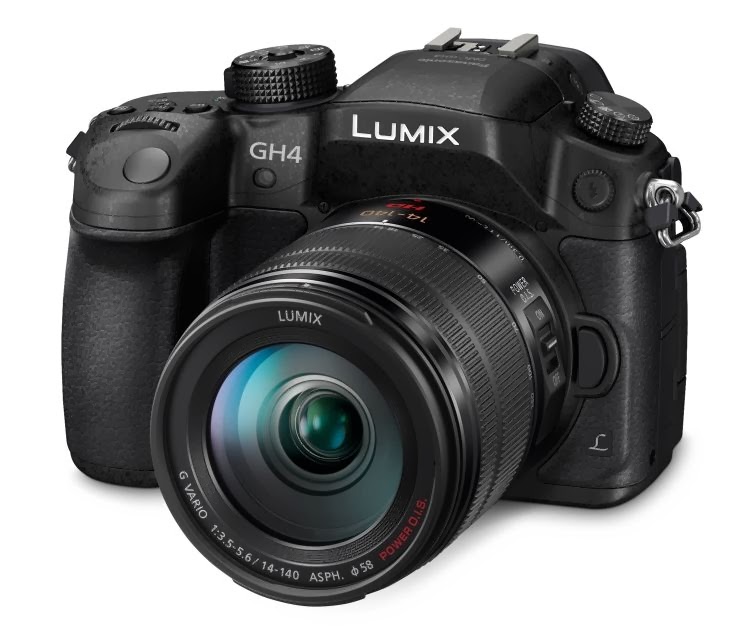
The LX100 can be seen as a pocket-sized GH4 in many respects, and that is awesome. The battery is too small for significant video work, but perhaps an extended battery grip will be released. The GH4 is a fantastic product and the only product in Panny's imaging stable that is both impressive and well-priced. Some of its thunder was stolen by the amazing Sony A7S, but even then, the GH4 does many things that A7S cannot do, and does it for $1,000 less. If Panasonic isn't cowardly, they will wedge as many pro-level video features as they can into the LX100. That is the only way they will be able to justify the extreme price.

Otherwise, the $900 will be much better spent on a compact camera with interchangeable lenses.

Canon G7 X: All aboard the X train! Canon finally realizes that their P&S market will continue to erode unless they do something, and the best course of action is to copy Sony! So they did. The G7X is an RX100 with a Canon wrapper, and that's not a bad thing. Canon's wrapper is better than Sony's. It's unfortunate that the camera is priced at a premium, but ah well. Also, I will always trade a bit of size for image quality, and if I were in this market, I'd take the new LX100 over this any day of the week. But, to Canon's credit, I'd probably rather take this over the RX100.

Fuji: Fuji was pretty quiet this show. They released the updated X100T, which is a solid update. If you have the older X100's, I don't see you wanting to upgrade. If I wasn't so interested in video, I would have bought an X100 long ago.

The real progress is in Fuji's ever-growing lens system. They've produced some winners and losers, and these new lenses look like winners. I'm worried about the distortion on the 16mm lens, since Fuji has shown Olympus-like predilections when it comes to dealing with optical problems in software, but I withhold judgment. Also, Fuji appears to be getting a bit too confident as the prices on these lenses are rather high.

All in all, I like Fuji, and these does little to alter my opinion. In fairness to other companies, though, Fuji is able to do this simply because their lens system is small. Canon and Nikon have huge lens systems already and...... you know what? No. I take that back. I'm thinking as I write this, in case you couldn't tell.

Canon and Nikon could do this. They could release updates to their lenses, especially since many of them suck. But instead, they don't. They rest on lenses, some of which were designed in the 80's. So again, kudos to Fuji.

Leica D-Lux: Say wha?!... you may be saying. But yes, the overpriced Leica versions of the LX100 is a fine choice. Basically, it's because you get a license for Adobe Lightroom included with the camera, a $140-ish value. Along with what I consider to be a much more attractive design, the $100 final premium doesn't seem too bad.

Olympus E-PL7: This is almost bad, but I'm giving them the benefit of the doubt. Olympus continues to work at the small, feature-packed, mid-range camera segment with good results. None of Olympus' cameras are selling terribly well, and Fuji and Sony are slowly but surely eclipsing the m4/3 format, but they still deserve recognition when they release a decent product.

It's unfortunate, though, because both Sony and Fuji have more impressive products for the price, and in Sony's case, cheaper. Even Olympus offers the E-M10 for only $150 more. I feel that this camera will be stillborn on the market, even though I'm sure it will be fine.

Sigma: Sigma continues to impress with their new lenses for great prices and their innovative Foveon cameras. I talk up Sigma a lot since they are truly innovating. They are truly providing new tools and new experiences, not just rehashes of old ones. Their DP cameras are utterly unique and I think that everyone should own one. And since their DP cameras are such unique tools, the new viewfinder attachments don't seem bulky, they seem like a new form of imaging, because they are. Definitely the domain of deliberate professionals and enthusiasts and all but useless for Soccer Moms/Dads, these cameras have captured my imagination.

The Bad:

Samsung: Samsung continues to plug away at this mysterious product called a cam-ehr-ahh. Nothing they have hitherto produced has been correctly priced or competitive with other companies. Their sensors only very recently entered the same league as Sony, Nikon, and even Micro 4/3. Their lens selection is poor and expensive. Their workflow is poor and slow. Their system is lean. And worse still, serious photogs seem to be a corporate afterthought for a company that is making most of its money from Galaxy cell phones.

The new NX1 is an SLR-styled camera just as SLR style cameras are beginning their long, slow descent into sales Hell. It's APS-C just as Sony, Canon, and Nikon are beginning the rush to fill their product lines with Full Frame. It's among the most expensive APS-C cameras out there, besting everything that Fuji makes and cheaper than only the new, ridiculously over-priced Canon EOS 7D MkII.

The new camera will have only a single, high-end lens, which unsurprisingly is the lens they are releasing with the camera, the new 50-150mm f/2.8. That sounds like a decent lens, except that they will be charging $1,500. This isn't as badly overpriced as Panasonic and Olympus' lenses, but it's close. There is always the possibility that the image quality will be exceptional (for example, the Panasonic 42.5mm lens is priced too high, but at least the images are great) but since this is Samsung, I doubt it.

Moreover, if you are interested in saving money, you can buy very impressive lenses for cheaper than this lens from Sigma for Canon, Nikon, Sony, and even Pentax.

Basically, Samsung has given us no reason to ever consider their cameras, and this show doesn't change that.

Olympus 40-150mm f/2.8: Just as with Samsung, Olympus is releasing a similar lens with a similarly stupid price. Worse for Olympus, they have superior optical designs available in their Zuiko lens line, but they incomprehensibly refuse to release them.

Panasonic GM5: The strange success of the GM1 has of course spawned the GM5. It's slightly larger but has a few more features. Just as with Sony and their bizarre feature swapping with the various versions of the RX100, the GM5 loses the flash of the GM1 and replaces it with a viewfinder and hotshoe. I feel as though Panasonic is chasing the success of the Nikon 1, without realizing that the 1 only succeeded because it was a Nikon. It was actually a terrible camera.

Moreover, to me, this is Panasonic going down a market niche that is already dead. The GM1 was a surprise to me, but it wasn't a huge hit. It was simply a success. This area of the market — compact, fashionable phones — is doomed to die. Cell phone imaging has already reached a point where most people are happy with it for their uses. And as phone companies increasingly focus on their cameras, stylish, small cameras stand no chance.

The Ugly:

Canon EOS 7D: Canon's EOS 7D Mark II was a huge disappointment. The 7D, for reasons I do not fathom, was a legend. It was a huge success, selling millions of units over its five year life. Its sequel is an event. Leave it to Canon to make that event so thoroughly meh. The 7D MkII isn't even terribly competitive with other cameras from last year.

Canon has also spent the past five years showing everyone that it doesn't give a shit about APS-C as a viable professional format. Everyone thought the 7D heralded a new wave of pro-level crop lenses, but these never appeared. We got some in the form of Sigma and Tamron's excellent crop lenses, but none from Canon. Hell, if not for Fuji and Sigma, I would say that APS-C is dead.

Along with that, Canon will cripple its video so as not to step on the toes of their more expensive video equipment. And for the honor of owning this product, you will have to pay almost as much as the Sony A7R, nearly twice as much as a Nikon D7100 or Sony A77, and right about the same price as the Nikon D600 and Canon 6D.

There is only one conclusion to draw: Canon is insane.

The Open Camera Module: Olympus should be proud. They're the only company to make all three lists. Their Open Module display was just silly. To me, this was Olympus saying "Look! We innovate and stuff too! We've got, like, ideas!"

I make this highly negative assessment because even in their presentations they say that they are unsure as to why or how anyone would use this. This is Olympus screwing around and thinking that it was viable for public presentation. It's not. Try making something that people want.

Nikon D750: It seems pretty harsh to place this under ugly, but it's because this camera is much more than just a camera, it reveals the intransigence that still holds sway at Nikon.

Basically, the entire market is changing. Camera sales are dropping. SLR sales are dropping quickly and mirrorless cameras are not picking up the slack effectively, even though their sales are increasing. This state of affairs was predicted by me, certainly, but my many, many others long before I started writing. This isn't news. Lots of people knew this was coming.

So instead of changing with the times, Nikon is doubling down, apparently under the assumption that there are hidden islands of camera-buying demographics that their current product line-up somehow doesn't cover. That is the philosophy behind the D750: there are people for whom the D610 is too cheap and the D810 is too expensive.

I do not believe these people exist. There are people who would buy the D810 if it cost as much as the D750, but Nikon isn't doing that. There are people who would buy the D610 if it had more features, but Nikon isn't doing that. Instead, they are making yet another iteration in between the two and charging a premium for it.

Panasonic CM1: Panasonic's last effort in the cell phone space was two years ago with the Eluga. It had a rather cool commercial that was ruined by five solid seconds of branding and stupid slogans. It was a catastrophe that lost Panasonic a bucket of money. It was a nice cell phone, and was one of the first to be water sealed, but they tried selling it for $700.


The phone underperformed almost every other major phone on the market. If they had sold it for $300, they might have stood a chance, but that trademark Japanese Electronics Company arrogance came out in full force and they tried charging over twice that. And today, Sony is making the news because their own smartphone division is losing buckets of money because Sony continues to try to charge a premium for their products without any actual innovation.

Not to be outdone, Panasonic is back at it, with an even more ridiculous phone at an even more ridiculous price. Since Panasonic skipped the 1" sensor altogether with the LX100, they decided to put one in a phone. A very large phone. Actually, it's not really a phone, it's a camera with a phone in it. In fact, Panasonic is even calling it a smart camera. And they're so unsure of this Frankenstein creation that they're only releasing it in France and Germany... for some reason. Oh, and they're charging 900 Euros for it.

Everything is wrong with this stupid creation. First, before I rip it to shreds, understand that I think cell phone imaging is in need of significant innovation. I thought that Sony's QX cameras were a good start, and I own a Nokia 1020, warts and all. The prospects for imaging in our little, pocket-sized supercomputers are limitless. If they had left the CM1 in the oven for a while longer, it may have come out truly desirable, but in its current form, it's like trying to make a very small layer cake instead of just baking a great cupcake.

I could really go for a cupcake right now.

Setting aside my lack of cupcakes, let's look at this cameraphone the three ways available to us: as a camera with a phone; as a phone with a camera; as a hybrid.

As a camera with a phone, it sucks. It's nothing more than a severely limited P&S in a bulky body. This is irritating because I argue that the first company to release a high-powered product with an Android OS will own the future of imaging. They refuse to do this because that would require opening up their system, and none of them want to do this. They all want to be Canon and Nikon, with their walled gardens filled with their chattle, from whom they can suck blood at will. It's the same blind greed that stops companies from releasing cell phones that are truly open.

So basically, this is a bad camera with what will likely be a mediocre phone attached to it.

Looking at it the other way around is just as problematic. This is a terrible phone. It's wide and bulky and will never fit into a jean pocket. It's nearly twice as expensive as an unlocked iPhone or Galaxy S. No one with their sights set on a phone will give this a second look.

But what about the final way? How about looking at as a unique hybrid. This is undobutedly how Panny would like you to see the phone, since it's the only way this could make sense, but a hybrid is supposed to give you the best of both worlds, not the worst. The CM1 isn't compact like a phone nor feature-rich like a camera. It has the bulk of a camera without the features!

Perhaps Panny thinks they can add features in software, but that requires a company that actually knows software, and Panny doesn't know software at all. If they promised that this will be the first in a long line of CM cameras, developers might, might, fill the breach, but that is highly unlikely when they could instead release software for Android or iOS and reach a far wider market.

For the hybrid angle to work, the CM1 would need to offer something very similar to carrying both a phone and a camera, while offering the ease of a unified body. For 900 Euros (about $1,200), I could buy an iPhone (on contract) and a new LX100 and still have money left over! The iPhone fits easily in my pocket, and I'm quite accustomed to carrying a camera around on a strap. Basically, the CM1 is the answer to a problem no one has.

That doesn't mean I think that it's not a shot in the right direction. It is. But Panasonic has proven quite well that they are not a phone company. They are better at making cameras. And make no mistake, a camera with Android is still the future, but it will only be the future when the letters attached to it are S, L, and R.

All of this is unfortunate, since I would likely buy this camera... phone... Camerhone? Cameroon? Phonera? Who cares. I would likely buy this if it wasn't such a mess and for all for an eye-watering price. I've never owned a "normal" phone. I've always owned a strange phone from a faraway land. Back in the day I was importing Nokia N-series phones for their badass cameras. Before that, I was rocking an Ericsson that was originally on Vodafone in Germany. I have a thing for weird phones, so I am perhaps the person most likely to look upon the CM1 fondly, and I still think that it's stupid.

---

And that's that. Another year, come and gone. I'm not seeing the level of competitiveness that I would have hoped for, but even this boring year is way beyond the dreary 2000's, where each year brought nothing in the way of innovation save for more, overpriced Canon and Nikon garbage. That says a lot about the industry where even a bad year is actually pretty good.

It's a good time to take photos.

Wednesday, July 2, 2014

Sony Drops Price of RX10 by over $300

An interesting addition to my article about the RX100M III. We now can see, without doubt, what competition can do. Sony's excellent RX10 (one of my favorite Sony products ever) wasn't exactly aggressively priced at $1299. There was a good reason for this: other camera companies weren't competing for shit. Sony was seemingly all alone in trying to deliver high quality P&S cameras.

Well, another company finally came along, the Panasonic FZ1000. It is likewise a very impressive product. It's made doubly impressive in that the lens is twice as long as the Sony, probably has superior video capabilities, and also costs $400 less.

No longer! Competition, I choose you! Sony has responded to the new Panny with a $301 price drop on the RX10, bringing it down to a $99 premium over the FZ1000. We will have to wait to see how the lenses compare and the cameras perform side by side to determine with the premium is worth it. It very well may be, since the f/2.8 lens on the Sony is a gem. Then again, if it proves to not be worth it, all Sony has done is let their arrogance shine through.

Sunday, June 15, 2014

Panasonic FZ1000 Is Genuinely Surprising

Bravo Panasonic. You've done Sony one better, and aside from the video-oriented GH series, that is a first.

The Panasonic FZ1000 is Panasonic's response to the phenomenal success that Sony has had with their 1-Inch sensor cameras, the RX100 and the RX10. It sports a 400mm lens, a rugged body, and all the doodads one would expect.

Before I go into all that, though, I want to again stress how shockingly dumb camera companies are. It was apparent to everyone that point-&-shoot cameras with small sensors were dead the moment that the iPhone came out. In 2007, camera phones weren't terribly good, but Nokia's line of N phones were already showing that they could be. I should know. I had the N93, N95, and an N86. I rarely wanted for a P&S when I had them.

As such, everyone with half a brain knew full well that to continue sales of P&S cameras, companies would have to start offering upgrades in the form of increased sensors, features, and capabilities. So, from the release of the Nokia N91 in 2005, it took Sony eight years to release the RX100. And that was worthy of praise!!!

I don't want to bash Sony too much, because at the very least they released the damned thing. The rest of the companies were doing less than shit. They were doing negative shit. That's a mathematical term. Its symbol is -S. Canon = -S. If Sony had not released the RX100, the FZ1000 would absolutely not exist.

But now that it does, it is a very good thing.

The FZ1000 is very different from the Sony. The sensors are the same size, but the Panasonic is noticeably larger. It's zoom range also extends to 400mm eqv while maintaining an F/4.0 at that length. For such a compact size, that's quite good. Obviously, we have lenses out there for APS-C and m4/3 that reach 400mm eqv, but their quality at that range is rather shite. If this camera can stay sharp, I think that Panasonic deserves a booyah. This is especially true considering the price: $900. That's precisely where newer, better P&S cameras should be. Pricey, but of course they're pricey; these are an upgrade from your iPhone.

Even if the camera softens up a bit on the far end, that extra range is a big differentiator from Sony. My biggest interest, though, is video. Panasonic admittedly has developed a good reputation for high-quality video in its camera offerings. The RX10 is already Sony's best video camera, so if Panasonic can bring something special, then it will be impressive indeed.

Noise performance on the sensor seems competitive, but that's unsurprising. Very few cameras are noticeably behind the curve when it comes to noise performance. I wrote a little while ago that ISO is no longer important, and with every new camera release, that is confirmed. Are there slight differences? Yes, but rarely large enough to be seen in actual situations.

That said, the 1" sensor still looks a point-&-shooty. I don't think that will ever change. That is, of course, only a concern for pro-sumer photogs. For anyone else, this will be so vastly superior to your old P&S or your cell phone as to be a breath of fresh air after living in Shanghai. And again, the price can't be beat.

This is progress. I really look forward to video from this camera. If they can produce something special, I know many a videographer who may pick one up.

Sunday, May 25, 2014

Does The GH4 Hold up?

It's been about a month since the release of the GH4. While I still await the review from EOSHD, I think it safe to say that the GH4 mostly lives up to the hype. ISO performance is very good, resolution is excellent, color is good, and on and on.

I am disappointed that the increase in sensor read speed is countered by the increase in resolution, meaning that rolling shutter is actually worse than the old GH3. As such, the GH4 is pretty much useless for high-speed action shots.

It's interesting to note that sensors are "clocked" in much the same that computer CPUs are clocked. You can set a sensor to run slower or faster. Setting it faster uses more power and generates more heat, which is where design concessions come into play.

I suppose, then, that a dream feature would be the ability to add a cooling fan and "overclock" the sensor, thus reducing rolling shutter. Panasonic wanted to keep the camera usable for stills, though, and hardware like that would make the camera look more like something that Blackmagic might design.

Most importantly, unlike the GH3, which was loaded with artificial crippling, the GH4 is truly limited by the hardware. This is important, because it means that Panasonic has genuinely made the best product they could for the price. This is not an arrogant product.

Panasonic should be concerned, though, because they also have their X lenses, which are arrogant products. The 42.5mm lens is laughable for its price. And seeing how popular the GH4 already is, the nearly complete lack of people using it with Panasonic lenses is rather conspicuous. Granted, most people talking about the camera online are talking about it as regards video, but still; you would expect at least a few people to be using Panasonic lenses. Instead, everyone is using Sigma and/or old Olympus 4/3 lenses.

The Micro 4/3 industry is still, sadly, very small. Outside of Japan it is being left behind by both Sony and Fuji in terms of interest and mind-share. As I've laid out in my writings, this is entirely the fault of Panasonic and Olympus. Their sheer, unmitigated stupidity has stunted the growth of a camera system that should have taken the world by storm.

I hope that the GH4 succeeds. I think that it will succeed. But Panasonic will have to bring their A-game in a big way for the holiday season. They need far more than one camera; they need well-priced glass, and lots of it.

Friday, February 7, 2014

The GH4 Saves Panasonic From Itself

It's no secret that neither Olympus nor Panasonic, the two progenitors of Micro 4/3, are doing well. Damn poorly is probably a better way of describing it. Obviously, neither company sells only cameras, and as such success or failure in the camera market can only go so far in changing the fortunes of the broader companies. That doesn't mean, though, that their cameras aren't a very interesting window into the companies and their problems.

Both Olympus and Panasonic are "old world" Japanese companies. Their executive structure is very Japanese, their culture is very Japanese, and their product philosophy is very Japanese. Sony was like that, too, which is why they brought in Howard Stringer, a Brit, in 2009 in an attempt to de-Japanify the company to encourage a turnaround. Obviously, that hasn't happened.

Olympus actually tried the same thing when they hired another Brit, Michael Woodford, to run the company. Not only did he, by his own description, clash with Olympus's corporate culture, he uncovered a movie-worthy, multi-billion-dollar corruption cover-up!

Amazingly, Olympus has been doing the best of the two. Panasonic recently saw its stock price go up after their cost-cutting efforts saw some rather impressive success, but aside from that, the company has been a shit-show.

Long story short, Panasonic and Olympus haven't been terribly competitive. And as can be seen in Panasonic's intransigence in its other markets and Olympus's twenty-year accounting scandal, the cause of this poor performance is arrogance. Pure, unadulterated arrogance.

I think that the arrogance was fueled by the fact that the companies were, in many ways, making good products. No one was buying Panasonic's televisions, but they were good televisions. No one was buying the Olympus PEN series, but they were pretty good little cameras. Simply making a good product isn't the same as being competitive, though, and that is something that these blasted companies cannot get through their heads.

They need to create interesting products. Exciting products. Inventive products. Products that are different from every other company and are cheaper than every other company. Instead, both Panasonic and Olympus try to be Canon, just as every cell phone company tries to be Apple.

It's hard to decide which company has been the biggest disappointment. Olympus has refused to redesign their 4/3 lenses and bring them to the Micro 4/3 market while Panasonic has produced an entire slew of overpriced and under-specced lenses and cameras. And both companies release lenses that feature zero optical correction and as such have distortion that could almost be classifiable as dubstep.

In the end, it's an academic question. Micro 4/3 is exciting because of other companies. Blackmagic and SLR Magic are producing exciting products. Metabones Speedbooster will put a nearly limitless selection of glass at our disposal. The stuff coming out of the two original companies has been constantly disappointing.

The GH4 does not appear to be a disappointment. It is a groundbreaking camera. It puts true 4K recording ability into the sub-$2,000 market and features pro-level features that could put GH4s on movie sets. It's that good. If the photographic abilities are good, this becomes the 4/3 camera that the GH3 should have been.

It will also stand as an example of what other companies should be doing. I'm looking squarely at Nikon and Canon. With the processing power in their cameras, their video quality should be far higher than it is now. The only Nikon camera with decent video quality for the price is the 1-Series, which is awful in most other ways.

Importantly, the GH4 is a unique product! For that reason, it is impossible to say that it is overpriced. Is Panasonic seeing ridiculous profits from the camera? How should I know! There are no other products on the market that do what the Panasonic does for its price. The next cheapest 4K camera, the Blackmagic 4K, costs over twice the price and is a pure video camera. The GH4 is unique, and at $1,999, it is impressive.

I speculated about whether it was going to be a global shutter or not, and we now have our answer: no. While that's mildly disappointing, it's not surprising. Global shutters are very difficult to design and implement.

Panasonic has managed to increase sensor read-out by 50%, and the video will use a 4K crop of the sensor, which makes the video area very similar to the Blackmagic Cinema camera, which is the GH4's primary competition. That center crop means that actual readout is going to be very quick since, I'm assuming, they don't need to dump the unused pixels. They can simply dump the pixels being used and reset the sensor more quickly. Rolling shutter won't be non-existent, but I would imagine that it won't be bad.

The GH4 is an important product because it finally brings some competition to Blackmagic. I'm not saying the BM needed competition. Lord knows, they've been competing like crazy without anyone else. Still, having two companies mix it up is better than one.

If you are an average user, it's important to understand what the GH4 is not. It is not the Micro 4/3 camera to own. This is not the one camera to rule them all. This is the camera to own if video and video quality is of significant importance to you. If you will use it primarily for photographic applications, it is much too expensive. A 4/3 sensor will never provide $2,000 worth of technology for photography alone. The E-M1 costs $1,500 and is already overpriced, which is likely why no one is selling it for sticker.

Video is another banana completely. For video, sensor size is of much lower importance. Very rarely is the shallow depth of field allowable from full-format cameras ever used in video. It's fun to have, but it is very much a niche tool. Indeed, the smaller sensor provides a large number of distinct advantages. $2,000 for that sensor in an otherwise robust package is a reasonable price to say the least.

I cannot wait to get my hands on a GH4. $2,000 is too much for my pockets right now (my GH2 will have to serve its master for a bit longer) but used cameras will hit the market eventually. And when they do, I'm going to make a 4K film, simply because I can.

---

On a side not, EOSHD recently complained about how companies like Olympus seem almost psychotically averse to including video in their products. 

Last year Olympus gave what I thought to be a very strange reason for their video modes being a pale imitation of Panasonic’s.

Olympus don’t want to be too good at video, in-case their cameras become known for it. They want to be associated with photography professionals and not cat-video YouTube uploaders, just in case they might get popular with filmmakers and sell us lots of cameras.

I can really sympathise with Olympus, it must be a terrible prospect to have better image quality on your cameras and higher sales. Canon also recently became extremely worried that video might improve on their DSLRs (thanks to Magic Lantern) with terrible consequences. The nightmare scenario of offering their customers better video absolutely scared the life out of one rep who said the threat of better video would be dealt with by their lawyers!

Joking aside (or I am?!) why doesn’t Olympus want to be known for video? From the perspective of Olympus looking at the video features and their users, it might look like video users just sit around uploading clips of kittens to YouTube and editing in iMovie. (Maybe that’s true!?) But if we’re pointing the finger here, I’d say leave off the pop-art filter and HDR images, you photographers! There are as many casual stills shooters as there are video shooters and the 1500 euro E-M1 should not compromise one bit for any of them. Put the gimmicks in the lower end stuff instead.

Indeed on the E-M1 photographers get a raft of serious features and improvements like a 1/8000 shutter and weather sealing and video users get some new funky special effects for their 1500 euros. If you press the left button whilst recording video the image echoes and then returns to normal. If you press the down button the image ghosts and leaves a trail. Case closed.

This is an example of that arrogance that I mentioned earlier. It's not that Olympus doesn't want to be good at video. It's that they want to be known for video when they choose to be known for video. Then, they can try to squeeze money from it. He mentions Canon without making the connection.

Canon released the 5D Mark II which blew the world away with decent video. The Mark III comes out with identical video, and Canon was furious when Magic Lantern came out, going so far as to threaten the group with a lawsuit. Panasonic did the same thing with the GH3. They locked out hackers, crippled aspects of its design, and tried to sell the AF100 for $4,500.

If these companies can't squeeze money from you, they don't want you having it, logic, reason, and value be damned!

Canon can afford to be that arrogant, at least for now, because of their size and reach. Olympus and Panasonic cannot, cannot, afford to be that arrogant, and the fact that they are trying that reveals a corporate obliviousness that enters the realm of pathological.

If nothing else, the GH4 signals a crack in that pathology. That is a good thing. Of course, it could also just be a fluke. Because lord knows, neither the GH1 nor GH2 became legends because of Panasonic's doing.

Wednesday, January 15, 2014

My Increasing Disillusion With Micro 4/3

DxOMark recently reviewed the newest version of the Sigma 35mm f/1.4 lens. It performs fantastically. It is easily the best lens in their tests. It has autofocus and costs only $900. And this is the rub: with a Metabones image reducer-type adapter, this would become a 17mm f/0.7 on m4/3. F/0.7. For $900.

Note: I converted the focal length into 4/3 terms. The image actually seen on the frame would be identical on full-frame or 4/3.

Tell me again why Panasonic is trying to sell its 42.5mm f/1.2 for $1,600? On what fucking planet do they live?

The Olympus E-M5 is a great camera. I love it. The E-M1 is great. I even feel much better toward the GX7 now that I've had a chance to use it. But the Speed Booster just makes the entire system untenable. A $600 adapter opens up the lenses of other systems and turns the market on its head.

To play Devil's advocate against myself, I understand that some degree of design must go into keeping the lenses at a particular size. Yes, the FF lenses are significantly faster, but they are also larger — often by a great deal. That said, it doesn't matter. Any photog on Earth would happily trade a little size for a lens that is faster than f/1.

Metabones hinted at a live micro 4/3 adapter, and that would be peachy keen. I do like my tiny lenses and frequently go back to my beloved GF1. Especially when I don't want to truck along a Nikon as when just going to a restaurant with friends. And while FF equipment is usually larger, it isn't always by much. Canon's 24mm, 28mm, 35mm, 50mm, and 85mm primes aren't very large and wouldn't appear out of place on a small body. And again, with the Speedboster, their apertures are all below f/1.0. But whither Micro 4/3 with that ability at hand? A system of small cameras that people buy to then use their Canon lenses?

The prices of 4/3 lenses are just becoming too big a burden for the sake of maintaining the system. The Panasonic 42.5mm really drove that home in grand fashion. I've felt a bit ripped off with my current lenses and their public statements indicate that they will be making no course corrections in the future, meaning I will feel even more ripped off then. The Speed Booster has made it so I can no longer abide this. Not when the Sigma 35mm becomes f/1 on the Fuji X Pro 1, a camera that can shoot ISO6400 without much breaking a sweat.

You can see in the freaking dark. Nothing in Micro 4/3 offers this, and if it did, they would try to charge a bazillion dollars for it. That I will not accept.

There is a concept in economics called the opportunity cost. It's the sort of thing you learn in econ-101. Basically, when you spend money, you are not just spending the money, you are spending the opportunity to buy other things. So when I spend $500 on a lens, it costs me the $500, any other lens I could have bought, a wardrobe, four pairs of shoes, one-hundred $5 Footlongs from Subway, and on and on.

Included in that cost are all of the other competitive camera products out there. Some of them are truly amazing. And that's the rub, right there. That's why camera companies are so desperate to get you into their closed or semi-closed system. That dynamic alters the value equation. Because then, when you spend $500 on a lens, you are not spending the opportunity to buy another lens, because you would have to buy into an entirely new system. It reduces the number of alternative uses of your money, reduces the opportunity cost, and thus increases the value of the lens beyond what it would be in a perfectly competitive landscape.

The art of pricing is thus determining how far a camera company can squeeze its adherents before they start to jump ship to another system.

I bought into Micro 4/3 at the very beginning. I even bought some old 4/3 lenses. And I have felt squeezed ever since.

Saturday, January 11, 2014

Panasonic GH4 4K Has Me VERY Excited


Micro 4/3 companies have a tendency to do this to me. Panasonic's GH3 caused a lot of excitement, but that was tempered when it finally released as a whelming product, and that was further tempered by the release of Blackmagic's Cinema Camera and the ever-evolving nature of Magic Lantern on Canon cameras. Long story short, the GH3 ended up dead in the water. It wasn't bad, but competition combined with Panasonic's push to lock out hackers really rather doomed the camera.

One of the things about the GH3 that annoyed me was that it was filled with restrictions. Most of these restrictions were explained as technically required because of a hybrid design, and anyone who looked much into it could tell that this was nonsense. The restrictions on the GH3's abilities were put there to protect the professional hardware that Panasonic was trying to sell, like the ill-fated AF100.

This was likely rooted in the arrogance that Panasonic had developed after the truly amazing success of the GH2 in the pro and semi-pro market. Honestly, every single videographer that I know owns a GH2. No, it never sold twenty million units, but it did sell millions, and to a very special demographic. That is a significant achievement.

Hopefully, Panasonic's pain has slapped a bit of sense into their collective head. The GH4 4K must both be cheaper than and better than the Blackmagic Cinema Camera. The latter point is subjective. Panasonic could easily be better than the BCC in many ways.

It was the former point that was in question, and it appears that Panasonic has that covered.


Rumors have the price of the GH4 4K at less than $2,000. If true, that will make the GH4 a killer product. I don't know if the sensor will be global shutter, but that could be one way for Panasonic to become super-relevant very quickly. The Blackmagic 4K currently has a global shutter, but its sensor is smaller than 4/3 and the camera costs $4,000, so even if Panasonic doesn't manage a global shutter, its real competition is the $2,000 2.5K original Blackmagic Camera, and if Panny undercuts them by a couple hundred bucks, the GH4 suddenly becomes a required piece of kit. My GH2 may finally be replaced.

That is of course assuming that this is a hybrid camera. I've heard that it could be fully video-oriented with only a smattering of photographic tools. Even if that is true, I wouldn't much mind. I've already split my photographic and video tools into two sets, as have most other pro-thusiasts.

I should point out that I have a great deal of affection for Panasonic still. The GF1 was fantastic and was the first camera that I used that managed to have excellent video just sorta' thrown in. I want Panasonic to succeed. I will not hold my tongue, though, when they fail. They shouldn't fail. Failure is a product of greed and stupidity, because they obviously have the engineers.

I have high hopes for the GH4 4K. Please don't let me down, Panasonic.

Thursday, January 9, 2014

I'm Proven A Little Wrong

I said that I wanted to be proven wrong with the new Panasonic 42.5mm lens, and I have been... at least a little.

Lenstip, one of the websites that reviews distortion based on uncorrected raw files, has posted their review of the lens and it is very positive. The lens is very sharp, nearing the performance of the Voitlander 25mm and the Olympus 75mm. Like those lenses, its distortion is very low, which is a first for a Panasonic lens.

It's not a perfect lens, though. It has some extreme longitudinal aberrations and its vignetting is high. The latter problem wouldn't seem extreme except that of all the problems that a crop sensor should face, vignetting should be the least of them.

But it is interesting that the article compares this lens to the Voitlander 25mm and the Olympus 75mm. Both of those lenses performed better and cost a great deal less. That price makes what should be a competitive lens into something that is still competitive, but not terribly impressive.

As I said, this does little to change my thoughts on the lens. It is significantly overpriced. Even with its OIS, it shouldn't have cost more than $1,200. That said, it is at the very least a good performer. Once the price comes down to something reasonable, or if you can find one on the used market, this could be an excellent purchase.

Until then, your money can be spent much more wisely elsewhere.

Tuesday, January 7, 2014

Panasonic's New 42.5mm Nocticron Priced and Dated... And It Is Bad.

Let's face it, everyone knew that the upcoming 42.5mm lens was going to be a disaster. Not a disaster in quality, but a disaster in price and availability. If Panasonic priced it well (under $1,000), they wouldn't have enough to fulfill demand for the next twenty-four months.

That was one possibility, but I never thought they would go that route. Panasonic is like the little kid that wants to play with the big kids, but doesn't quite get it. They don't realize that you need to have arms before you can swing the bat. As such, Panasonic, in their desire to be Canon or Nikon, has saddled their new lens with a truly absurd price.

Sixteen-hundred dollars. Sixteen-hundred. That makes it the most expensive piece of camera equipment that Panasonic makes, not counting pro-oriented gear.

As I mentioned in an earlier article about abandoning Micro 4/3, there are no excuses for these lens prices. In image terms, this lens is the equivalent of an 85mm f/2.4 lens on Full Frame. For less than one-quarter the price, one could buy the Canon 85mm f/1.8 and put it on a FF camera with three times the ISO performance at high-ISO and significantly better performance at low-ISO. Or go crazy! Splurge an extra $400 over the Panny and buy the Canon 85mm f/1.2 that will produce dreamscapes!

Or perhaps the Nikon 85mm f/1.4 for only $1,100. Or the Sigma 85mm f/1.4 for only $900.

And remember, the Panasonic is a crop lens. Meaning that to achieve similar results, one could buy the Canon 50mm f/1.2 and simply chop off the edges to achieve an 85mm field of view. This would cost the same, but the Canon lens has more glass in it. The Nikon 50mm f/1.2 only costs $1,200, though, so that would save you money.

As if to rub salt into Panasonic's self-inflicted wound, Fuji announced its own lens in the 85mm range, the 56mm f/1.2. It costs, shocker, $1,000. The Panasonic is the only lens among these that is stabilized, but when the most popular Micro 4/3 cameras are all sporting in-camera IS, this isn't much of a selling point, nor does it negate the price argument.

That is because the Panasonic lens is not on equal terms with these other lenses. It has less glass and less complex optics to achieve what it achieves. It is a cheaper lens. Panasonic asking the price that it is asking is pure greed.

It is especially greedy because I can all but guarantee that the distortion on the lens is off the bloody charts. Panasonic and Olympus have pioneered the act of producing crappy lenses, correcting in software, than trying to charge full price.

Maybe I'll be proven wrong. Maybe this lens will have amazing performance. Maybe it will be tack sharp wide-open, with minimal distortion. Maybe it will have beauitful bokeh and supreme resistance to flaring.

Or, more likely, it will follow what other Panasonic lenses do: provide good image quality for too much money. I was proven wrong by the Sigma 18-35mm, and I would love to be proven wrong again. I really, truly would. I'm sitting on a Panasonic GF1 that has seen very little action. I actively want to be proven wrong. I just doubt I will. And even if I were, the mere existence of the aforementioned Sigma 18-35mm lens makes any argument in favor of the Panasonic tenuous.

Perhaps Panasonic's decision would make a little more business sense if they had a lock on their lens system. The GH3 and GH2 are still very popular in videography circles, meaning that a fast lens would be valuable. But Panasonic has already been surpassed by Voitlander, Blackmagic, and SLRMagic. Panasonic does not have a monopoly and yet is trying to charge monopoly prices.

I'm sure that some executive somewhere at Panasonic is aware of these problems. I'm all but certain that their logic is to advertise inflated prices and then sell on discount. This keeps the impression of exclusivity and value. They did this with both of their X lenses. They are doing this in the hope that at some point in the future, their system will take off and they will then be able to actually charge these prices. This of course won't happen, but hope has that nasty habit of springing eternal.

Silent Spring, in Panasonic's case.

Thursday, November 21, 2013

I Think That I Will Be Abandoning Micro 4/3 For Photography

Something hit me earlier today: a van. And while I was lying on the ground waiting for the EMTs to arrive, I thought about Micro 4/3 and my usage of the system.

Both Olympus and Panasonic talk about how their systems offer excellent image quality while also reducing the size of the lenses, and this is true, but only to an extent. To understand why, we have to analyze the way the various companies use the measure of focal length.

Focal length is really a rather useless measure. What's more important is the field of view, and this is measured in degrees. It is in this measure that lenses of various systems can be directly compared. For example, a 25mm Micro 4/3 lens has a crop factor of 2. This means that to determine the field of view in comparison to Full-Format, we need to multiply the focal length by 2. So a 25mm Micro 4/3 lens has the same field of view as a 50mm Full-Format lens.

It's important to remember that using Full-Format as the baseline is entirely arbitrary. That's why Medium-Format is larger than Full-Format. Back in the day, Full-Format was just called 35mm, or sometimes small format. There were as many "formats" of film as there were photographers, since you could mess around with your setup as much as you pleased.

So with 35mm set as the "default," we developed crop factor. The reason why crop factor is called crop factor, though, is because that's what it is technically doing. When you put a FF lens on an APS-C camera, the sensor is only seeing the center part of the image circle. It is taking a crop of the image circle. You could achieve the same effect by using a FF camera and simply cutting off the edges to "zoom" the lens.

So it is with Micro 4/3. A 25mm Micro 4/3 lens has the same field of view as a 50mm FF lens and is noticeably smaller than a 50mm FF lens. It is not much smaller than a FF 25mm lens, though! And from that wider image, you simply do your own crop factor by cutting away the edges of the picture until you produce the same field of view as the Micro 4/3 lens.

This is not a perfect comparison. There is still a size penalty, but it is not as large as Olympus and Panasonic would like you to believe. For example, the Olympus 75mm f/1.8 is 64x69mm and weighs 305g. Its 150mm focal length on FF is somewhat matched by the Canon 135mm f/2, which is much larger at 83x112mm and weighs a stonking 750g.

But take Canon's 85mm f/1.8. It is 75x72mm and weighs 425g. That's much more comparable, and from that, you can take a center crop to achieve a 150mm field of view. Again, there is still a size penalty, but not nearly as large.

Does this comparison hold true for zoom lenses? This is harder because the zooms of the Micro 4/3 system are mostly of medium to low quality, while the 4/3 Zuiko zooms are hard to directly compare to Canon and Nikon. The two stars of the show right now are the Olympus 12-40mm and the Panasonic 35-100mm, so we'll use them.

Canon has a 17-40mm f/4 that about fits the bill. The lens is a stop slower, but a FF sensor will be three stops better than a Micro 4/3 sensor, and the bokeh of a f/2.8 Micro 4/3 lens is actually the bokeh of an f/5.6 FF lens. So not only will that FF lens be better in low light, it will have shallower depth of field. The Canon lens is also $160 cheaper than the Olympus.

But, again, the size penalty exists. The Olympus is a featherweight at 70x84mm and only 382g. The Canon 83.5x96.8mm and 500g. For me, the size penalty is not enough to sacrifice what FF can give me, all while giving it to me at a lower cost. And considering the colossal failure that was 4/3, it's obvious that many people feel this way.

The Panasonic 35-100mm has sister products in the form of the Canon 24-105mm f/4 and the Sigma 24-105mm f/4.  The Panny is 67.4x100mm and weighs 360g. The Canon is 83.5x107mm and weighs 670g. The Sigma is 88.6x109.4mm and weighs a porky 885g. There is a lot of extra weight in those FF lenses, but not much extra size.

Is there a better comparison among the Zuiko lenses? Yes. Olympus has a 14-35mm f/2.0. That lens is two stops faster, giving it similar low-light performance to Canon's f/4, and has precisely the same depth of field. This monster is 86x123mm and weighs a Brobdingnagian 900g. It also costs $2,300. As you can imagine, not too many of these were sold.

And since I love throwing this lens in the mix, the Sigma 18-35mm f/1.8 blows them all out of the fucking water.

Micro 4/3 should be giving us a size and price benefit. That is the value proposition. Smaller sensor, less glass, lower price. Neither Panasonic nor Olympus want that. They want to earn the money that Canon earns. Well too bad. The world has changed. Sony realized that, and that is why they've ditched their APS-C systems.

I am well aware that simply comparing numbers isn't the best way to reach a conclusion. One 50mm lens can have the same numbers while being vastly superior to another 50mm lens. This could be called the "Leica Argument." First, anyone who thinks Leica's lenses are priced based on how much they cost to make is an idiot. You are paying a lot for the Leica badge. Second, I'm comparing well-regarded lenses to other well-regarded lenses. And while the Canon isn't quite as sharp, it doesn't have distortion bad enough that it releases Cenobites like all Micro 4/3 lenses.

So, yes, I will likely be leaving Micro 4/3 behind for photographic purposes, especially with the dynamite new Full-Frame gear from Sony. But I will absolutely not be abandoning the system. Video companies have grown to love Micro 4/3 and for good reason. Blackmagic and SLRMagic (no relation) both have put the full force of their development behind the mount, and while the GH3 is dead, the upcoming GH4 may have what it takes to compete.

This is no mean compliment, either. Video is exploding and becoming very important to a large part of the market. The "average" consumer will never move beyond their phones, but there are millions of people around the world who care immensely about video. And seeing as how Canon, Nikon, Sony, Fuji, and Olympus are only vaguely aware that these things called "moving pictures" exist, the possibility that Micro 4/3 will become the default format for video is a real possibility.

For that reason, I will not only not be abandoning Micro 4/3 entirely, I will likely invest even more in it, just not with anything from the two progenitors of the system, Panasonic and Olympus. This is sad for me, because the new E-M1 from Olympus really is an A-grade product. I held it and I loved it. But a system is built on its glass and its price, and Panasonic and Olympus just cannot get their shit together.

Monday, September 30, 2013

Panasonic GF1 Finally Loses Top Spot at Flickr

It took years, but the Panasonic GF1 has finally fallen from the top spot in the ranking of Panasonic's cameras. Considering that the camera wasn't terribly cheap when it launched, and that the sensor was noisy as all hell, its monster success is a testament to how wonderfully groundbreaking it was. Anyone who used the GF1 at the time understands the excitement that Micro 4/3 generated, because if the first camera out of the gate was the GF1, and one of the first lenses was the still-amazing 20mm f/1.7, what did the future hold!?

Well, now we know. The future held very little. Micro 4/3 flopped around like a fish on a boat for three years before the E-M5 came along, and while it's suitably good, the complete and utter failure of Panasonic to follow up the GF1 with solid products tempers my excitement for anything new.

But that's beside the point. The GF1 was great, and only now, after many months of being available for some silly-cheap prices, has the GX1 has surpassed it. Farewell, mighty GF1.

There is some comedy to be found in this story, as well. The ascension of the GX1 has less to do with the success of the GX1 and more with the continued fall of the GF1 from the Flickr charts. Panasonic can't even compete with itself! It has to simply wait until its previous, good, products fall into disuse. That's a bang-up business strategy.

Panasonic GX7 Gets First Discount... Before it Releases


While this certainly isn't on the level of the absurd Sigma SD-1, it's still amusing. Panasonic has already discounted the GX7 by $100 before it even released. Olympus has likewise discounted the E-M5, putting both cameras at $899. Chances are, one of the two companies planned to do this and the other company's spies became aware of it, thus resulting in this absurd situation where both cameras suddenly drop at the exact same moment.

The E-M5 has continued to sell well over the course of the past year and I'm confident that this will only serve to give it another boost. If anything, this may cannib... actually, no, I am quite sure that it will cannibalize sales of the new E-M1. The E-M5 and E-M1 are very close in performance, and with what has suddenly ballooned to a $500 premium, the E-M1 will be a very tough sell. Of course, it always was primarily targeted at photogs sitting on a stash of Zuiko lenses with nowhere to use them.

This is a very tough situation for Panasonic. The GX7 isn't competitive with the E-M5. The image quality is identical, but everything else about the E-M5 is a cut above. It's weather sealed, it's better built, its IBIS is better. I have a feeling that the GX7 is going to end up where Panasonic's other cameras have all ended up, selling well, but only after massive discounts. I bought a GX1 for a friend, brand new, for $199. You can't even get used, decade-old, Canon gear for that price.

Sooooooo, yeah. I'd wait to buy any Olympus gear, since further discounts are likely planned for the holiday season. But other than that, Oly isn't going to be discounting the E-M5 too much; it's been far too big a success.

Monday, September 23, 2013

Panasonic's Failure May Not Be Its Fault


I've been out of the videography market for some time. I was producing large numbers of videos but have since switched over to not having much time for anything, so I was unaware of some recent developments. These are both good developments and also incredibly frustrating.

The Panasonic GH3 and G6 (a GH2 in most ways), have been sales disappointments. Chances are, the GX7 will also be a disappointment. One of the major issues is that Panasonic isn't producing anything competitive, but the other issue is that the hacker community appears to have abandoned their newest products. They are the ones who kept the GH2 alive.

The first problem is that Panasonic made the GH3 much harder to hack. As of this writing, no major hack of the GH3 has taken place. They did this to try to protect their higher-end, pro-oriented gear which they were artificially segmenting from their consumer products. The first manifestation of this segmentation was the now-infamous failure, the AF100.

But the second problem is that an open source project called Magic Lantern has done wonders with Canon's cameras. Canon's 5D Mark III was a total disappointment to anyone in the Canon system and did little to encourage others to jump into the system. The 5D Mark II was a groundbreaking camera that made high-quality video recording a reality in an SLR body. The Mark III... did absolutely nothing better.

But good god, with Magic Lantern, the Mark III, and to a lesser degree the 7D and the 50D, are wonder-machines. They are wonder machines to the point that the Mark IIIs available for rental from Lens Rentals actually come with Magic Lantern pre-installed. That an open-source, aftermarket piece of software has become standard tools is amazing. It is a testament to the community and also a testament to the failure of Canon to do this from the get-go.

Canon sucks. Just throwing that out there.

So that may be why the GH3 has failed to set the videography world on fire like the GH2 did. They're simply moved on to the 7D and 5D, both of which can now produce raw video that blows everything the GH3 can do so far out of the water that it clears the land and enters another body of water.

Don't think that I am getting all soft and squishy about the quality of Canon's products. If a company ships a product that requires the community to make it not suck, that it's still a crap product and a crap company. This seems like a good time to remind people that Canon threatened to sue Magic Lantern if they tried to modify the EOS 1D X. So, yeah. Canon produces crap and then tries to stop people from making their crap less crappy. Brilliant business model.

But back to Panasonic. The market for serious videography tools is relatively small. Instead of the tens of millions of mirrorless and SLR cameras sold every year, serious video tools amount to a few million at most.

But that smaller market has more money and is also more willing to get into the gritty details of their craft. Android grew quickly because the hackers loved it. Remember, early Android was terrible. The GH1 and GH2 rose above the din only because of the work of Vitaliy Kiselev. And now, Canon's old 50D and 7D are taking what the GH2 once had because the hackers have moved over there.

So the failure of the GH3 may be partially that a larger community has simply sprung up around Canon's cameras, and with them being much more popular, the community was immediately larger. Hell, Magic Lantern has nearly 23,000 likes on Facebook. For something so esoteric, that's impressive. Damned impressive.

But also, Panasonic did nothing to protect themselves from this turn of events. If anything, their resistance to the hacker community damaged the GH3 and made it vulnerable. That's stupid business. That's, again, why Panasonic's stock price was recently at a level that it hadn't seen since 1985. Coincidentally, this was the year that Back to the Future was released. In part III, Marty McFly told the doc that "all the best stuff is made in Japan."

Oh, how times change.

Sunday, September 22, 2013

Another Example of How Panasonic and Olympus Are Full of Crap

Panasonic and Olympus are both idiotic companies. They are also frustrating as all get-out, most expecially Olympus. Panasonic is frustrating because both their cameras and lenses have problems. Olympus is frustrating because their cameras are very good, but their lenses have problems.

Both Panny and Oly have either announced or released wide-angle zooms in the past year. Panny released their 12-35mm last year, and Oly is releasing their 12-40mm later this year. Both of them are slow in the world of high-end glass. I find this ridiculous because their sensors are very small. Making bright lenses should be easy. They are not doing this because of greed.

The Sigma 18-35mm exposed in stark illumination the absurdity at work. It is designed to operate on a larger sensor, costs $200 less, is over a stop brighter, is sharper, more even, and has significantly lower distortion. It makes a laughing stock of Oly and Panny's lenses.

The Sigma lens should have come out years ago, but, as always, the lens companies didn't want to release it. They make so much money from herding their chattle into their closed systems that the idea of giving them a good price for good equipment probably caused physical illness. Thankfully, the Sigma has finally let the cat out of the bag.

But I'll express my love for the Sigma in another post. For now, let's focus on how Olympus and Panasonic suck.

A common reprise from PanOly, and from their fans, is that the lenses are slower because size was a consideration. First off, that's total horse shit because no one who truly cares about photography would ever give up a stop of light for anything. It increases the artistic boundaries of the lens by an order of magnitude... ya' know, if art was measured in the decimal system.

Also horseshit is that the Micro 4/3 sensor is quite a bit smaller than APS-C — 25% smaller to be exact. That means that any lens that is designed for APS-C can be reduced by 25% to find the equivalent lens size for the 4/3 sensor. Obviously, this only applies to the optics. The conversion isn't entirely applicable since motors and whatnot don't scale linearly.

So let's compare lenses, shall we. The Sigma is 78mm wide and 121mm long. Reduced by 25%, we have a lens that is 58.5mm wide and 90.75mm long. It's also a stonking-heavy lens at 810g. And while the weight comparison isn't as accurate, let's apply the 25% to it as well to get a hypothetical lens that weight 607.5g.

The Panasonic lens is 67.6mm wide and 96mm when extended. I used the extended length because the Sigma is an internal focusing lens and has a set length. As such, the hypothetical Sigma lens is SMALLER, he typed in ironic bold & capital letters, than the Panasonic lens. It's a boatload heavier, though; the Panny only weighs 305g.

The Olympus is 70mm wide and between 84-94mm long (I can't find a measure of its extended length). Again, the Oly is larger.

This is not meant to be an absolute, irrefutable, scientific study. It is meant to illustrate that when Oly and Panny say they had to take size into consideration with their lens designs, they are lying. They are lying because they want more of your money for less of their product. In Oly's case specifically, they have this fantasy that their SLR Zuiko line will somehow come back to life and as such, they cannot compete with it.

It really makes me wonder how the hell Olympus managed to release the 75mm f/1.8. Was no one watching that lens designer when he accidentally green-lit a great lens?

Regardless... Olympus is better than Panny. Their upcoming 12-40mm will sell for $999, which would have been great if not for the release of the Sigma. In this, they have already shown more sense than Panasonic did with the $1300 price for their 12-35mm. Granted, they've gone and named their new lenses "Pro," which I'm sure has caused many a pro to chuckle at Olympus' presumptuousness.

I'm a fan of primes. I think most non-journalists and non-wedding photogs are fans of primes. That said, I can't deny the ease of having a zoom lens on me. I would like a zoom lens that doesn't limit me. The Sigma did that in a big way. I would like one for my 4/3 cameras, as well. But both me, and the few other 4/3 shooters who I know, the instant we remove our 25mm f/1.4 or 75mm f/1.8, we regret it.

Indeed, my GF1 has spent nearly its entire life with the 25mm f/1.4 on it. It's a compact camera that gives me wonderfully artistic capabilities. The 12-35mm Panasonic forced me to work very hard to ensure that my shots didn't appear to be from a very good P&S. The zoom didn't liberate my artistic vision, it restricted it. That is something that I could not tolerate.

So again — I know that I reiterate this like some sort of broken recording of an old man yelling at kids to get off his lawn — I will not buy any of these new lenses from Panasonic or Olympus. In fact, I'm not sure who would.

Actually, that's a very good question, and I mean it sincerely. If you are a serious photog and you own these lenses, why did you buy them and why do you continue to use them? Are you not at least a little upset that they appear to be artificially limited?

Monday, February 18, 2013

Panasonic Shines, Nikon Shits The Bed

We have two pretty big DxOMarks to discuss: the Panasonic GH3 and the Nikon 1 J3. I'd like to first talk about the Nikon because, ya' know, bad news first and all that. Basically, the 1 cameras started off pretty poor. They were expensive, with meager optics, and image quality that was closer to compact P&S cameras than 4/3. Worse still, the Sony RX100 came out and so soundly defeated the poor Nikon that it essentially obviated the latter's existence entirely.

It's been over a year since the 1 cameras released, and we are now on the third generation of them. And much like the early trajectory of Micro 4/3, instead of progressing, Nikon actually appears to be regressing with their little "toy" cameras. The Nikon J1 scored 56 on DxOMark (ten points behind the Sony RX100), and the more expensive V1 scored a 54. The J2, released six months later, scored a 54. The new J3, released six months after that, has no scored a 52. The $800 V2 scored an utterly pathetic 50.

I feel the need to again express the perspective from which I lampoon companies and use words like "pathetic." I am very, completely, keenly aware that any camera, in the right situation, produces good images and am certainly a follower of the assertion that the best camera is the one that you have with you. That said, all products that are for sale do not exist as standalone tools that are judged on their own merits alone. They are also judged based on the other options in the marketplace.

Thus, when one company sells a product that targets a similar market as another company's product, but under-performs that other company's product in every way, they are rightfully worthy of mockery. This company is saying to customers "give us your hard-earned money for this product." Thus, if the product turns out to be inferior to other products, it is an infuriating thing. It's as though the company tricked the customer into buying something that she could have bought more cheaply or better made elsewhere.

That said, let's move on. The Nikon 1 was a mess from the beginning. It was cowardly product meant to avoid competition with Nikon's APS-C cameras, which themselves are crippled and meant to avoid competition with Nikon's FF gear. It is an large, integrated system of products that aren't as good as they could be.

I close this part of the article with a reiteration: only a maniac would buy the Nikon 1 at full price.

Now, for the good news. Panasonic's GH3, like the Nikon, has its fair share of compromises obviously meant to allow Panasonic to sell more expensive video-oriented gear. It also have a detail that has grown to increasingly annoy me: slow flash sync. Most prothusiast cameras have a flash sync in the neighborhood of 1/250th sec. Mirrorless cameras seem to have ditched this entirely in favor of 1/160th, sometimes even lower. Olympus is the sole company producing a mirrorless camera with the hallowed 1/250th sync with the E-M5.

That is but a single aspect of the camera that is annoying, and there are others, but by and large, the camera is a success. It is an undeniable evolution of the GH2, even though it lacks the multi-aspect sensor. It manages to combine video and photo in a way that is truly unique in the market. If Panasonic had not decided to price the camera so high, it would be the camera to own for Micro 4/3 and perhaps the entire mirrorless market.

So how is this good news? Because, DxOMark has confirmed that the sensor in the GH3 performs just as well as the very good sensor in the E-M5. There are very minor differences, and most of them likely fall into the realm of statistically insignificant, so the two cameras are, for all intents and purposes, the same.

I'm very happy with this result. Most people who had been following the GH3 or handled it, as I have, pretty much expected these numbers. There are no surprises, which is both a good and a bad thing.

The biggest problem facing the GH3 remains its price. Camera stores are pricing it past the Fuji X Pro 1, and even at MSRP it is more expensive than the E-M5, X-E1, Sony NEX-7 and 6, and more than twice the price of the GH2, which remains its biggest competitor and is still quasi-available. I own a GH2 and have zero motivation to pay such a massive premium for the upgrade. The GH3's price is, like the X-Series lenses, untenable.

I see this as part of Panasonic's problem, and the reason why the entire company is in the financial toilet (the company's stock is trading at the same level as it did in 1985). Panasonic is like Sony in the belief that it can still charge the premiums that it demanded back in the 80's and 90's based on its mere status as being made in Japan. Sorry guys. We here in the US are well disabused of such a notion compliments of when your products put all of us out of business thirty years ago. You better learn the same lesson but quick, else you'll end up in the same place as Zenith.

Tuesday, January 15, 2013

The World Has Changed: The Metabones Image Reducer

Changing the world.
I spend most of my time on this site complaining about the intransigence of the camera companies. They grew so fat and dumb on their old business model that they were dead-set against any sort of change.

Obviously, that change has been coming whether they wanted it or not. The compact market has been destroyed by cell phones; a few groundbreaking cameras have altered the landscape; and now smaller companies are stepping in to fill the gap left by the arrogance of the larger companies.

One of the (many) things about 4/3 and Micro 4/3 that has always pissed me off was the prices they tried to charge for their good lenses. Don't get me wrong, 4/3 has some of the best cheap lenses available, but the instant they try to make pro-thusiast lenses, that greed took over — the very same greed we see at Canon and Nikon.

Look at Panasonic's laughably-priced X lenses. One of the advantages of small sensors is that it is easier and cheaper to design optics for them. $1,300 and $1,500 were money grabs. And while many lens fanatics were aware of this, there wasn't anything motivating the discussion. No product that made people think about lenses in a different light, no pun intended.

All that changes now.

Metabones has released for the Sony NEX system what's called an image reducer. Basically, you put a full frame lens on this adapter and the element in the adapter squeezes all of the light from the full frame lens down into a smaller image circle that perfectly fits the smaller NEX sensor. Obviously, this makes the image brighter while also taking all of the light from that larger image circle that provides the rich bokeh and shallow depth of field.

If you are someone who regularly works with FF lenses on smaller sensors, be they APS-C or 4/3, this means that you no longer have to worry about crop factor. That is fucking incredible.

For those who are simply curious about lenses and lens design, this provides the motivation we needed to criticize companies' lenses on some sort of even ground. No longer will Panasonic be able to claim that their 12-35mm lens is just like Canon's 24-70mm lens, since we can now attach them to the same camera and see that Panasonic is full of shit.

For comparison's sake, let's take Canon's lenses. The 12-35mm Panasonic X has a constant aperture of f/2.8. Now let's look at what Canon has for the same, $1,300 price. Ok. They have nothing. But they do have a 24-70mm f/4.0 for $1,500. That's close enough.

With a 4/3-specific adapter (which Metabones is not yet making but probably will), that gives the Canon lens the same field of view but gives it an aperture of f/2.0! For $200 more than the Panny lens, the canon lens provides a full stop more light. And remember, everything Canon makes is overpriced because they are milking people who bought into their system, so Panasonic's price is really outside the realm of reason.

Or what about the Panasonic 35-100mm? That means we need to find a Canon lens that is 70-200mm. Well, that's only Canon's most popular focal range, like, evah, so we have quite a selection. For $2,000 we can have one with a constant aperture of f/1.4. If we are willing to ditch IS, we can have that lens for $1,500. $1,349 will net us a constant aperture of f/2.0. All of these lenses will be far brighter, possibly sharper, and undoubtedly have lower distortion than Panasonic's lenses.

I recommend going to Nikon's site, or Sigma and Tamron if you really want to save some money. Make your own comparisons. Take their FF lenses and simply double the brightness. F/4 becomes f/2. F/2 becomes f/1. To be fair, Panasonic's lenses are smaller than the Canon lenses, but when a $500 Canon zoom transforms from a mediocre f/3.5-5.6 to an excellent f/1.75-2.8, I don't care. Only a lunatic would care. Moreover, Olympus Zuiko glass has no excuse. Oly's top-pro lenses are quite large, meaning that in every way, they are competing with the FF lenses in this example.

This is going to be a seismic event, it's just not apparent yet. That is the reason why this technology — something that seems so obvious — has taken until now to be implemented. Camera companies didn't want this technology to exist. They liked having people trapped in their systems, unable to move between cameras and lenses. They liked that the entire thing was a confusing train wreck of standards and crop factors.

No longer.

Wednesday, December 19, 2012

First Small Price Drop On The Panasonic 35-100mm

Panasonic has instituted the first small price drop (a scant $50) on the new 35-100mm lens. I'd say that it's funny to watch Panasonic hunt and paw its way through the dark with its product pricing, but since I'm actually invested in m4/3, it more just pisses me off.

The 12-35mm has been selling slowly. Not so slowly as to call it a catastrophe, but certainly not with any exciting speed. This is partly expected — the lens is very expensive, and even in Cankon's systems, the expensive lenses sell with less vim and vigor. And if the numbers that I am gleaning from discussions with resellers and the number of reviews online had been achieved without sudden, large price discounts, I would say that I was wrong and Panasonic's pricing strategy was correct.

Only that's not how things are going. My local resellers had the lens sit on the shelf until they lopped $150 (or more) off the price. Even on Amazon, we saw similar large discounts straight from Panny, with the lens inexplicably dropping $200, then gaining it back, then losing $150, the gaining back $50. Used examples sell for well under $1,000, with many dipping below $900.

It seems that Panasonic's strategy is to drop the price, sell a bunch of lenses, and then increase the price, thinking that the early sales will cause some sort of "momentum." Or perhaps they want to sell the lens, but maintain that it is still "premium," with this charade of a pricing scheme. This is stupid.

The 35-100mm appears well on track to follow the same strategy. Not a single example  of the 12-35mm that I know of has sold for MSRP. I'm sure some have, but I don't know them. The 35-100mm similarly won't sell. Stop fucking around, Panasonic, and price these lenses at something the market is willing to accept.

Either that or WOULD OLYMPUS FINALLY BRING THEIR ZUIKO LENSES TO MICRO 4/3!!!

Friday, November 30, 2012

GH3 and E-M5 Compared... Finally.

Focus Numerique, a website that I like more with every upgrade to Google Translate, has posted its comparison shots taken with the GH3. They are near-as-damnit exactly what we were expecting for a camera based on the Sony sensor inside the E-M5.

The images posted are OOC JPEGs, but they also provide RAW files which can be easily and quickly dropped in Raw Therapee for deeper analysis. As expected, the JPEGs give the edge to Olympus at everything above ISO-800. The Oly manages to extract better everything from the data, but the extreme voodoo being applied sometimes causes images that look inferior to the GH3, so it isn't a complete a win for Olympus.

Moreover, once we view the files in RawTherapee, the differences become, at least as far as I can tell, academic. I think that the Olympus is still doing better, but even in RAW, the GH3 seems to be superior in some areas of the shots. I think that is all beside the point. I think that the real point is that the GH3's sensor is not a downgrade from the E-M5, which I, and many other people, were worried was going to be the case. Aside from the GH1 and to a lesser degree the GH2, Panasonic's cameras always had inferior image quality to Olympus' implementations of the same sensors, and both of them were significantly inferior to Sony's sensors.

Aside from the IBIS, the GH3 is lacking nothing in comparison to the E-M5 and brings many more goodies to the table. While better images than the Oly would have been some excellent icing on the cake, I can't be anything but satisfied with these results.

Tuesday, November 13, 2012

Yep, the GH3 Is Using A Sony Sensor

We finally have a RAW comparison of the newest iteration of Olympus' sensor and Panny's new sensor, and the results are as close to identical as one could hope to get.

Obviously, there are subtle differences in the noise patterns, and the Oly appears to be achieving marginally better detail at low-ISO compliments of its complete lack of AA filter. If we're picking nits, and we may as well, the Olympus seems to be retaining color and fine detail slightly better by ISO 12,800. We'll have to wait and see whether the GH3's ISO rating are closer to nominal than the Oly, which was pretty far away, meaning that for every ISO rating, the Panny is slightly more sensitive.

Three-quarters through the page, they have a series of photos taken at ISO-200 and then over-exposed in Adobe. It shows a huge boost in dynamic range compared to the GH2. Impressive and much, much needed.