Showing posts with label canon. Show all posts

Monday, September 22, 2014

Photokina 2014: The Big Sleep


Another Photokina has come and gone and now we can make sense of what was announced. Before I touch on anything, I think it a significant point to recognize how Photokina has lost some of its luster in the past few years. Most big camera announcements do not come at Photokina. Think about it: The Fuji X100 and X Pro were both announced in early spring, as were Sony's A7 cameras. Olympus E-M5, Panasonic GH3 and GH4, Sony RX100: as far as I remember, none of them were announced at Photokina.

Still, it's the only photography-specific show with major, international coverage, so that will always make it something.

So, that said, moving on.

This was a very boring Photokina. Maybe I'm being spoiled by the world of cell phones, tablets, and computers, but I've come to expect some degree of surprise and excitement from big shows. This Photokina isn't a huge letdown, but it's far from exciting. We have Canon playing catch-up two years late. We have Nikon producing capably boring, or boringly capable, products. Panasonic continues its quest to make a m4/3 camera that is somehow smaller than the sensor. Olympus continues to release pro-thusiast gear at a glacial pace. And Leica released some products for prices that make me question the sanity of Leica fans.

The Good:

Panasonic LX100: For me, the star of the show was the Panasonic LX100, which further confirms that camera companies need to stop fucking using X's in their camera names. It has far exceeded the realm of stupid and has entered utterly baffling.

I very much like the Sony RX100 and even bought an RX10, but the images never fully lose that P&S look. The colors are never as rich as a larger sensor, the noise is always visible, and on and on. The 4/3 format is as small as you can go and maintain an image that stands up to pixel peeping, and even then, that is sometimes not true. The LX100's sensor means that this is the most compact, pro-level imaging device that you can buy, besting the Canon G1X by about a centimeter in every dimension.

All is not well with the LX100, though. The camera's viewfinder is underwhelming, and the controls aren't really the best, and it's overpriced by about $200. Also, it's too big to be pocketable, but too small to be usable with gloves, large hands, or with truly professional speed. It is at least progress, though. The Sony RX100 was the first, others copied, and now Panasonic is moving it forward again with more robust video features and a larger sensor.

Panasonic and Olympus have both hinted at the prospect of dropping m4/3 in the future. This is because they want to charge Canon-like prices for their products, but can't because they're products haven't really been all that good. Then Sony comes along with the RX1, A7, A7R, and A7S and can suddenly charge Canon prices while still selling as many cameras as they can make. Just as with the RX1, a good transitionary product for Panasonic could be a fixed-lens camera with serious video chops. It would be expensive, since video requires fantastic optical mechanics, but I bet that it would sell. I see the LX100 as a portent of this future.

The LX100 can be seen as a pocket-sized GH4 in many respects, and that is awesome. The battery is too small for significant video work, but perhaps an extended battery grip will be released. The GH4 is a fantastic product and the only product in Panny's imaging stable that is both impressive and well-priced. Some of its thunder was stolen by the amazing Sony A7S, but even then, the GH4 does many things that A7S cannot do, and does it for $1,000 less. If Panasonic isn't cowardly, they will wedge as many pro-level video features as they can into the LX100. That is the only way they will be able to justify the extreme price.

Otherwise, the $900 will be much better spent on a compact camera with interchangeable lenses.

Canon G7 X: All aboard the X train! Canon finally realizes that their P&S market will continue to erode unless they do something, and the best course of action is to copy Sony! So they did. The G7X is an RX100 with a Canon wrapper, and that's not a bad thing. Canon's wrapper is better than Sony's. It's unfortunate that the camera is priced at a premium, but ah well. Also, I will always trade a bit of size for image quality, and if I were in this market, I'd take the new LX100 over this any day of the week. But, to Canon's credit, I'd probably rather take this over the RX100.

Fuji: Fuji was pretty quiet this show. They released the updated X100T, which is a solid update. If you have the older X100's, I don't see you wanting to upgrade. If I wasn't so interested in video, I would have bought an X100 long ago.

The real progress is in Fuji's ever-growing lens system. They've produced some winners and losers, and these new lenses look like winners. I'm worried about the distortion on the 16mm lens, since Fuji has shown Olympus-like predilections when it comes to dealing with optical problems in software, but I withhold judgment. Also, Fuji appears to be getting a bit too confident as the prices on these lenses are rather high.

All in all, I like Fuji, and these does little to alter my opinion. In fairness to other companies, though, Fuji is able to do this simply because their lens system is small. Canon and Nikon have huge lens systems already and...... you know what? No. I take that back. I'm thinking as I write this, in case you couldn't tell.

Canon and Nikon could do this. They could release updates to their lenses, especially since many of them suck. But instead, they don't. They rest on lenses, some of which were designed in the 80's. So again, kudos to Fuji.

Leica D-Lux: Say wha?!... you may be saying. But yes, the overpriced Leica versions of the LX100 is a fine choice. Basically, it's because you get a license for Adobe Lightroom included with the camera, a $140-ish value. Along with what I consider to be a much more attractive design, the $100 final premium doesn't seem too bad.

Olympus E-PL7: This is almost bad, but I'm giving them the benefit of the doubt. Olympus continues to work at the small, feature-packed, mid-range camera segment with good results. None of Olympus' cameras are selling terribly well, and Fuji and Sony are slowly but surely eclipsing the m4/3 format, but they still deserve recognition when they release a decent product.

It's unfortunate, though, because both Sony and Fuji have more impressive products for the price, and in Sony's case, cheaper. Even Olympus offers the E-M10 for only $150 more. I feel that this camera will be stillborn on the market, even though I'm sure it will be fine.

Sigma: Sigma continues to impress with their new lenses for great prices and their innovative Foveon cameras. I talk up Sigma a lot since they are truly innovating. They are truly providing new tools and new experiences, not just rehashes of old ones. Their DP cameras are utterly unique and I think that everyone should own one. And since their DP cameras are such unique tools, the new viewfinder attachments don't seem bulky, they seem like a new form of imaging, because they are. Definitely the domain of deliberate professionals and enthusiasts and all but useless for Soccer Moms/Dads, these cameras have captured my imagination.

The Bad:

Samsung: Samsung continues to plug away at this mysterious product called a cam-ehr-ahh. Nothing they have hitherto produced has been correctly priced or competitive with other companies. Their sensors only very recently entered the same league as Sony, Nikon, and even Micro 4/3. Their lens selection is poor and expensive. Their workflow is poor and slow. Their system is lean. And worse still, serious photogs seem to be a corporate afterthought for a company that is making most of its money from Galaxy cell phones.

The new NX1 is an SLR-styled camera just as SLR style cameras are beginning their long, slow descent into sales Hell. It's APS-C just as Sony, Canon, and Nikon are beginning the rush to fill their product lines with Full Frame. It's among the most expensive APS-C cameras out there, besting everything that Fuji makes and cheaper than only the new, ridiculously over-priced Canon EOS 7D MkII.

The new camera will have only a single, high-end lens, which unsurprisingly is the lens they are releasing with the camera, the new 50-150mm f/2.8. That sounds like a decent lens, except that they will be charging $1,500. This isn't as badly overpriced as Panasonic and Olympus' lenses, but it's close. There is always the possibility that the image quality will be exceptional (for example, the Panasonic 42.5mm lens is priced too high, but at least the images are great) but since this is Samsung, I doubt it.

Moreover, if you are interested in saving money, you can buy very impressive lenses for cheaper than this lens from Sigma for Canon, Nikon, Sony, and even Pentax.

Basically, Samsung has given us no reason to ever consider their cameras, and this show doesn't change that.

Olympus 40-150mm f/2.8: Just as with Samsung, Olympus is releasing a similar lens with a similarly stupid price. Worse for Olympus, they have superior optical designs available in their Zuiko lens line, but they incomprehensibly refuse to release them.

Panasonic GM5: The strange success of the GM1 has of course spawned the GM5. It's slightly larger but has a few more features. Just as with Sony and their bizarre feature swapping with the various versions of the RX100, the GM5 loses the flash of the GM1 and replaces it with a viewfinder and hotshoe. I feel as though Panasonic is chasing the success of the Nikon 1, without realizing that the 1 only succeeded because it was a Nikon. It was actually a terrible camera.

Moreover, to me, this is Panasonic going down a market niche that is already dead. The GM1 was a surprise to me, but it wasn't a huge hit. It was simply a success. This area of the market — compact, fashionable phones — is doomed to die. Cell phone imaging has already reached a point where most people are happy with it for their uses. And as phone companies increasingly focus on their cameras, stylish, small cameras stand no chance.

The Ugly:

Canon EOS 7D: Canon's EOS 7D Mark II was a huge disappointment. The 7D, for reasons I do not fathom, was a legend. It was a huge success, selling millions of units over its five year life. Its sequel is an event. Leave it to Canon to make that event so thoroughly meh. The 7D MkII isn't even terribly competitive with other cameras from last year.

Canon has also spent the past five years showing everyone that it doesn't give a shit about APS-C as a viable professional format. Everyone thought the 7D heralded a new wave of pro-level crop lenses, but these never appeared. We got some in the form of Sigma and Tamron's excellent crop lenses, but none from Canon. Hell, if not for Fuji and Sigma, I would say that APS-C is dead.

Along with that, Canon will cripple its video so as not to step on the toes of their more expensive video equipment. And for the honor of owning this product, you will have to pay almost as much as the Sony A7R, nearly twice as much as a Nikon D7100 or Sony A77, and right about the same price as the Nikon D600 and Canon 6D.

There is only one conclusion to draw: Canon is insane.

The Open Camera Module: Olympus should be proud. They're the only company to make all three lists. Their Open Module display was just silly. To me, this was Olympus saying "Look! We innovate and stuff too! We've got, like, ideas!"

I make this highly negative assessment because even in their presentations they say that they are unsure as to why or how anyone would use this. This is Olympus screwing around and thinking that it was viable for public presentation. It's not. Try making something that people want.

Nikon D750: It seems pretty harsh to place this under ugly, but it's because this camera is much more than just a camera, it reveals the intransigence that still holds sway at Nikon.

Basically, the entire market is changing. Camera sales are dropping. SLR sales are dropping quickly and mirrorless cameras are not picking up the slack effectively, even though their sales are increasing. This state of affairs was predicted by me, certainly, but my many, many others long before I started writing. This isn't news. Lots of people knew this was coming.

So instead of changing with the times, Nikon is doubling down, apparently under the assumption that there are hidden islands of camera-buying demographics that their current product line-up somehow doesn't cover. That is the philosophy behind the D750: there are people for whom the D610 is too cheap and the D810 is too expensive.

I do not believe these people exist. There are people who would buy the D810 if it cost as much as the D750, but Nikon isn't doing that. There are people who would buy the D610 if it had more features, but Nikon isn't doing that. Instead, they are making yet another iteration in between the two and charging a premium for it.

Panasonic CM1: Panasonic's last effort in the cell phone space was two years ago with the Eluga. It had a rather cool commercial that was ruined by five solid seconds of branding and stupid slogans. It was a catastrophe that lost Panasonic a bucket of money. It was a nice cell phone, and was one of the first to be water sealed, but they tried selling it for $700.


The phone underperformed almost every other major phone on the market. If they had sold it for $300, they might have stood a chance, but that trademark Japanese Electronics Company arrogance came out in full force and they tried charging over twice that. And today, Sony is making the news because their own smartphone division is losing buckets of money because Sony continues to try to charge a premium for their products without any actual innovation.

Not to be outdone, Panasonic is back at it, with an even more ridiculous phone at an even more ridiculous price. Since Panasonic skipped the 1" sensor altogether with the LX100, they decided to put one in a phone. A very large phone. Actually, it's not really a phone, it's a camera with a phone in it. In fact, Panasonic is even calling it a smart camera. And they're so unsure of this Frankenstein creation that they're only releasing it in France and Germany... for some reason. Oh, and they're charging 900 Euros for it.

Everything is wrong with this stupid creation. First, before I rip it to shreds, understand that I think cell phone imaging is in need of significant innovation. I thought that Sony's QX cameras were a good start, and I own a Nokia 1020, warts and all. The prospects for imaging in our little, pocket-sized supercomputers are limitless. If they had left the CM1 in the oven for a while longer, it may have come out truly desirable, but in its current form, it's like trying to make a very small layer cake instead of just baking a great cupcake.

I could really go for a cupcake right now.

Setting aside my lack of cupcakes, let's look at this cameraphone the three ways available to us: as a camera with a phone; as a phone with a camera; as a hybrid.

As a camera with a phone, it sucks. It's nothing more than a severely limited P&S in a bulky body. This is irritating because I argue that the first company to release a high-powered product with an Android OS will own the future of imaging. They refuse to do this because that would require opening up their system, and none of them want to do this. They all want to be Canon and Nikon, with their walled gardens filled with their chattle, from whom they can suck blood at will. It's the same blind greed that stops companies from releasing cell phones that are truly open.

So basically, this is a bad camera with what will likely be a mediocre phone attached to it.

Looking at it the other way around is just as problematic. This is a terrible phone. It's wide and bulky and will never fit into a jean pocket. It's nearly twice as expensive as an unlocked iPhone or Galaxy S. No one with their sights set on a phone will give this a second look.

But what about the final way? How about looking at as a unique hybrid. This is undobutedly how Panny would like you to see the phone, since it's the only way this could make sense, but a hybrid is supposed to give you the best of both worlds, not the worst. The CM1 isn't compact like a phone nor feature-rich like a camera. It has the bulk of a camera without the features!

Perhaps Panny thinks they can add features in software, but that requires a company that actually knows software, and Panny doesn't know software at all. If they promised that this will be the first in a long line of CM cameras, developers might, might, fill the breach, but that is highly unlikely when they could instead release software for Android or iOS and reach a far wider market.

For the hybrid angle to work, the CM1 would need to offer something very similar to carrying both a phone and a camera, while offering the ease of a unified body. For 900 Euros (about $1,200), I could buy an iPhone (on contract) and a new LX100 and still have money left over! The iPhone fits easily in my pocket, and I'm quite accustomed to carrying a camera around on a strap. Basically, the CM1 is the answer to a problem no one has.

That doesn't mean I think that it's not a shot in the right direction. It is. But Panasonic has proven quite well that they are not a phone company. They are better at making cameras. And make no mistake, a camera with Android is still the future, but it will only be the future when the letters attached to it are S, L, and R.

All of this is unfortunate, since I would likely buy this camera... phone... Camerhone? Cameroon? Phonera? Who cares. I would likely buy this if it wasn't such a mess and for all for an eye-watering price. I've never owned a "normal" phone. I've always owned a strange phone from a faraway land. Back in the day I was importing Nokia N-series phones for their badass cameras. Before that, I was rocking an Ericsson that was originally on Vodafone in Germany. I have a thing for weird phones, so I am perhaps the person most likely to look upon the CM1 fondly, and I still think that it's stupid.

---

And that's that. Another year, come and gone. I'm not seeing the level of competitiveness that I would have hoped for, but even this boring year is way beyond the dreary 2000's, where each year brought nothing in the way of innovation save for more, overpriced Canon and Nikon garbage. That says a lot about the industry where even a bad year is actually pretty good.

It's a good time to take photos.

Tuesday, February 11, 2014

Canon's G1X Is... Better

Canon has a habit of producing overpriced crap. And remember, when I say crap, I use the word in a relative sense. There are no bad products, only bad prices, and Canon has some god-awful prices.

So it was with the stupid G1X. The lens was slow, soft, and slow to focus. The camera operations were slow and cludgy. And the price was way beyond what was warranted.

Irritatingly, it was still a decent hit. Not as big a hit as the inexplicably popular EOS M (I think it was because the camera dropped below $400 less than a month after launching), but it was still a solid success for Canon. It's amazing what a large network of resellers can do for your product.

Canon has released the inevitable follow-up, and it is... an upgrade. Based on the numbers alone, I still don't think that it will prove worthy of its price, but it's... No. I can't bring myself to do it. I want to like something Canon produces. Anything. But this camera ain't it. It's an acceptable product for a price that should only be attached to something innovative and market-leading.

The two most notable differences are the body and lens. The body ditches the bloody-stupid "viewfinder" of the old G1X, which is good, but it also ditches some of the physical controls, which is bad. Again, who the hell is this camera for? Anyone willing to plunk down the cash for this will want pro features. Why take them away?

The second big change, the lens, is the only major upgrade and one worth recognizing. It has a wider range than the old lens while also being faster by a full stop at the wide end, and over a full stop faster at the far end. That is impressive. The lens is almost enough to make me say "Hunh... yep, that's a camera," but it's still not a complete enough package, especially in a market where a similar price will buy you an E-M5.

This is Canon responding to the increasing erosion of their compact camera business. The original G1X was supposed to be that response, but, well... yeah. This is a legitimate response. It's too little, too late, and for too much, but if Canon had released this for $499 or $599, they could have stood a real chance of regaining some market share. But since this is Canon, they're releasing it for $799.

Obviously, if you're looking at this camera with a desirous eye, wait. Wait for the camera shows later in the year. Other companies are not standing still, and both Sony and Fuji are producing amazing things.

Perhaps, if Canon's market share collapses in the same way that it has been collapsing in Japan, they will finally get off their asses and produce the amazing products that they are damn well capable of producing.

Thursday, November 21, 2013

I Think That I Will Be Abandoning Micro 4/3 For Photography

Something hit me earlier today: a van. And while I was lying on the ground waiting for the EMTs to arrive, I thought about Micro 4/3 and my usage of the system.

Both Olympus and Panasonic talk about how their systems offer excellent image quality while also reducing the size of the lenses, and this is true, but only to an extent. To understand why, we have to analyze the way the various companies use the measure of focal length.

Focal length is really a rather useless measure. What's more important is the field of view, and this is measured in degrees. It is in this measure that lenses of various systems can be directly compared. For example, a 25mm Micro 4/3 lens has a crop factor of 2. This means that to determine the field of view in comparison to Full-Format, we need to multiply the focal length by 2. So a 25mm Micro 4/3 lens has the same field of view as a 50mm Full-Format lens.

It's important to remember that using Full-Format as the baseline is entirely arbitrary. That's why Medium-Format is larger than Full-Format. Back in the day, Full-Format was just called 35mm, or sometimes small format. There were as many "formats" of film as there were photographers, since you could mess around with your setup as much as you pleased.

So with 35mm set as the "default," we developed crop factor. The reason why crop factor is called crop factor, though, is because that's what it is technically doing. When you put a FF lens on an APS-C camera, the sensor is only seeing the center part of the image circle. It is taking a crop of the image circle. You could achieve the same effect by using a FF camera and simply cutting off the edges to "zoom" the lens.

So it is with Micro 4/3. A 25mm Micro 4/3 lens has the same field of view as a 50mm FF lens and is noticeably smaller than a 50mm FF lens. It is not much smaller than a FF 25mm lens, though! And from that wider image, you simply do your own crop factor by cutting away the edges of the picture until you produce the same field of view as the Micro 4/3 lens.

This is not a perfect comparison. There is still a size penalty, but it is not as large as Olympus and Panasonic would like you to believe. For example, the Olympus 75mm f/1.8 is 64x69mm and weighs 305g. Its 150mm focal length on FF is somewhat matched by the Canon 135mm f/2, which is much larger at 83x112mm and weighs a stonking 750g.

But take Canon's 85mm f/1.8. It is 75x72mm and weighs 425g. That's much more comparable, and from that, you can take a center crop to achieve a 150mm field of view. Again, there is still a size penalty, but not nearly as large.

Does this comparison hold true for zoom lenses? This is harder because the zooms of the Micro 4/3 system are mostly of medium to low quality, while the 4/3 Zuiko zooms are hard to directly compare to Canon and Nikon. The two stars of the show right now are the Olympus 12-40mm and the Panasonic 35-100mm, so we'll use them.

Canon has a 17-40mm f/4 that about fits the bill. The lens is a stop slower, but a FF sensor will be three stops better than a Micro 4/3 sensor, and the bokeh of a f/2.8 Micro 4/3 lens is actually the bokeh of an f/5.6 FF lens. So not only will that FF lens be better in low light, it will have shallower depth of field. The Canon lens is also $160 cheaper than the Olympus.

But, again, the size penalty exists. The Olympus is a featherweight at 70x84mm and only 382g. The Canon 83.5x96.8mm and 500g. For me, the size penalty is not enough to sacrifice what FF can give me, all while giving it to me at a lower cost. And considering the colossal failure that was 4/3, it's obvious that many people feel this way.

The Panasonic 35-100mm has sister products in the form of the Canon 24-105mm f/4 and the Sigma 24-105mm f/4.  The Panny is 67.4x100mm and weighs 360g. The Canon is 83.5x107mm and weighs 670g. The Sigma is 88.6x109.4mm and weighs a porky 885g. There is a lot of extra weight in those FF lenses, but not much extra size.

Is there a better comparison among the Zuiko lenses? Yes. Olympus has a 14-35mm f/2.0. That lens is two stops faster, giving it similar low-light performance to Canon's f/4, and has precisely the same depth of field. This monster is 86x123mm and weighs a Brobdingnagian 900g. It also costs $2,300. As you can imagine, not too many of these were sold.

And since I love throwing this lens in the mix, the Sigma 18-35mm f/1.8 blows them all out of the fucking water.

Micro 4/3 should be giving us a size and price benefit. That is the value proposition. Smaller sensor, less glass, lower price. Neither Panasonic nor Olympus want that. They want to earn the money that Canon earns. Well too bad. The world has changed. Sony realized that, and that is why they've ditched their APS-C systems.

I am well aware that simply comparing numbers isn't the best way to reach a conclusion. One 50mm lens can have the same numbers while being vastly superior to another 50mm lens. This could be called the "Leica Argument." First, anyone who thinks Leica's lenses are priced based on how much they cost to make is an idiot. You are paying a lot for the Leica badge. Second, I'm comparing well-regarded lenses to other well-regarded lenses. And while the Canon isn't quite as sharp, it doesn't have distortion bad enough that it releases Cenobites like all Micro 4/3 lenses.

So, yes, I will likely be leaving Micro 4/3 behind for photographic purposes, especially with the dynamite new Full-Frame gear from Sony. But I will absolutely not be abandoning the system. Video companies have grown to love Micro 4/3 and for good reason. Blackmagic and SLRMagic (no relation) both have put the full force of their development behind the mount, and while the GH3 is dead, the upcoming GH4 may have what it takes to compete.

This is no mean compliment, either. Video is exploding and becoming very important to a large part of the market. The "average" consumer will never move beyond their phones, but there are millions of people around the world who care immensely about video. And seeing as how Canon, Nikon, Sony, Fuji, and Olympus are only vaguely aware that these things called "moving pictures" exist, the possibility that Micro 4/3 will become the default format for video is a real possibility.

For that reason, I will not only not be abandoning Micro 4/3 entirely, I will likely invest even more in it, just not with anything from the two progenitors of the system, Panasonic and Olympus. This is sad for me, because the new E-M1 from Olympus really is an A-grade product. I held it and I loved it. But a system is built on its glass and its price, and Panasonic and Olympus just cannot get their shit together.

Friday, September 27, 2013

How Long have the EOS 6D and D600 Been Discounted?

I was just made aware that the Canon EOS 6D is being discounted by pretty much everyone. It can be had for $200 below MSRP online and many independent shops are selling it for $300-$500 off MSRP.

First, I'm surprised to see these prices. As far as I know, the 6D has been a monster hit for Canon. There's no reason for a big success to discount. Is it possible that the 6D has not been a success? Every dealer I know says it sold well.

This leaves open the possibility that the 6D sold well only because of discounts at the dealer level. Lord knows, we see that often enough in the camera world.

In confusion, I checked the primary competitor to the 6D, the Nikon D600, which has been an even bigger hit, and it is seeing similar discounts. I found two dealers with advertised prices for the D600 of $1,699 (all of my prices assume body-only).

Perhaps Canon and Nikon both realized that entry-level FF cameras desperately needed to be well below $2,000? Because, well, that's true. The cameras at the $1,000 price point are getting incredibly good, with Fuji's cameras rocking very similar noise performance. On the high end, the Sony RX1 and the Nikon D800 made obsolete any cameras even close in price. As such, both corporations did a top-down, not-advertised policy of discounting. That would certainly drive sales.

Regardless, while I am no fan of the Canon 6D, if you can net a new one for $1,500, it's hands-down worth it. The Nikon D600 is even more worth it. A saying that I've always liked is "there are no bad products, only bad prices." I thought the 6D was crap, but only for its original price. Lop a few hundred dollars off and it's a great time to enter the world of full-frame gear.

Monday, September 23, 2013

Panasonic's Failure May Not Be Its Fault


I've been out of the videography market for some time. I was producing large numbers of videos but have since switched over to not having much time for anything, so I was unaware of some recent developments. These are both good developments and also incredibly frustrating.

The Panasonic GH3 and G6 (a GH2 in most ways), have been sales disappointments. Chances are, the GX7 will also be a disappointment. One of the major issues is that Panasonic isn't producing anything competitive, but the other issue is that the hacker community appears to have abandoned their newest products. They are the ones who kept the GH2 alive.

The first problem is that Panasonic made the GH3 much harder to hack. As of this writing, no major hack of the GH3 has taken place. They did this to try to protect their higher-end, pro-oriented gear which they were artificially segmenting from their consumer products. The first manifestation of this segmentation was the now-infamous failure, the AF100.

But the second problem is that an open source project called Magic Lantern has done wonders with Canon's cameras. Canon's 5D Mark III was a total disappointment to anyone in the Canon system and did little to encourage others to jump into the system. The 5D Mark II was a groundbreaking camera that made high-quality video recording a reality in an SLR body. The Mark III... did absolutely nothing better.

But good god, with Magic Lantern, the Mark III, and to a lesser degree the 7D and the 50D, are wonder-machines. They are wonder machines to the point that the Mark IIIs available for rental from Lens Rentals actually come with Magic Lantern pre-installed. That an open-source, aftermarket piece of software has become standard tools is amazing. It is a testament to the community and also a testament to the failure of Canon to do this from the get-go.

Canon sucks. Just throwing that out there.

So that may be why the GH3 has failed to set the videography world on fire like the GH2 did. They're simply moved on to the 7D and 5D, both of which can now produce raw video that blows everything the GH3 can do so far out of the water that it clears the land and enters another body of water.

Don't think that I am getting all soft and squishy about the quality of Canon's products. If a company ships a product that requires the community to make it not suck, that it's still a crap product and a crap company. This seems like a good time to remind people that Canon threatened to sue Magic Lantern if they tried to modify the EOS 1D X. So, yeah. Canon produces crap and then tries to stop people from making their crap less crappy. Brilliant business model.

But back to Panasonic. The market for serious videography tools is relatively small. Instead of the tens of millions of mirrorless and SLR cameras sold every year, serious video tools amount to a few million at most.

But that smaller market has more money and is also more willing to get into the gritty details of their craft. Android grew quickly because the hackers loved it. Remember, early Android was terrible. The GH1 and GH2 rose above the din only because of the work of Vitaliy Kiselev. And now, Canon's old 50D and 7D are taking what the GH2 once had because the hackers have moved over there.

So the failure of the GH3 may be partially that a larger community has simply sprung up around Canon's cameras, and with them being much more popular, the community was immediately larger. Hell, Magic Lantern has nearly 23,000 likes on Facebook. For something so esoteric, that's impressive. Damned impressive.

But also, Panasonic did nothing to protect themselves from this turn of events. If anything, their resistance to the hacker community damaged the GH3 and made it vulnerable. That's stupid business. That's, again, why Panasonic's stock price was recently at a level that it hadn't seen since 1985. Coincidentally, this was the year that Back to the Future was released. In part III, Marty McFly told the doc that "all the best stuff is made in Japan."

Oh, how times change.

Thursday, April 18, 2013

The New Sigma f/1.8 Zoom Is The First Lens of The Post-Speed Booster Era

I said that the world had changed after Metabones announced their Speed Booster image-reducing lens adapter. To recap, what the Speed Booster does is take all of the light gathered by a full-frame lens and squeeze it down into an image circle that just fits an APS-C sensor. This does two things, first it eliminates the need for crop factor. Since the APS-C sensor is no longer taking only a small, center crop of the FF lens' image, it's no longer acting like a zoom. A 50mm full-frame lens no longer equals a 75mm APS-C lens. The final image is the same.

Second, it makes the image brighter. An f/2.8 full-frame lens increases in brightness to f/1.8 when all of that light is focused on the smaller APS-C sensor. It's wonderful.

There was nothing stopping lens companies from doing this. Canon, Nikon, et al., they could have made their FF lenses brighter on APS-C cameras with relatively small alterations to their FF lens optics. They did not do this because of greed.

Canon, Nikon, Sony: all of the camera companies make more money by restricting freedom. If they give you flexibility in how you manage your hardware, they limit their ability to squeeze money from your pockets. As such, it has taken them this long to simply take larger, FF lenses and squeeze them onto the APS-C sensor.

Indeed, even companies that exist solely as a discount alternative to system lenses, such as Sigma, display this greed.

Sigma is the first to respond, though. They have released an f/1.8 constant aperture zoom lens for APS-C sensors. It has an 18-35mm range, which equate to 27-52.5mm on full-frame, give or take a milimeter.

Usually, designing a lens and bringing it to market can take a long time — one to two years. I don't think that was the case with this lens. I suspect that they basically took an extant optical design and simply installed a Speedbooster-like optical element at the back of the lens.

Sigma does not have a FF lens with those specs, but they do have a discontinued lens that is 28-70mm f/2.8. That lens would equal around an 18-44mm f/1.8 on the Speed  Booster.

Moreover, if we analyze the measurements of the lens, we find similarly corroborating evidence. The 28-70mm Sigma lens weighs 18oz. The new 18-35mm lens weighs 28.6 oz. (If nothing else, the sheer weight and size of the lens confirms FF optics)

The Metabones Speed Booster with AF support weighs 7oz, giving the 28-70mm a weight of 25oz. Not exact, but close.

Similarly, the 28-70mm is 2.91" in diameter. Very close to the 18-35mm's 3.1". The length of the 28-70mm with the Metabones adapter attached is 4.43". Decently close to the 4.8" of the new 18-35mm, but not definitive.

All things considered, I think that this lens was a relatively quick rejiggering of an optical design they already had. When Sigma says that the design was difficult, I think they are lying. They are lying because they want to justify the very high price they are undoubtedly going to ask for it. Remember, this is the same company that tried to sell the SD-1 for $10,000.

Monday, December 3, 2012

Autofocus Matters: Olympus E-M5 vs. Canon EOS M

Not much to say about this. It's a knock-out. Good autofocus is an amazing photographic tool. There's a very good reason why its invention thirty years ago caused such a massive upheaval in the industry, resulting in the rise of Canon and Nikon and the nearly complete destruction of the old European photographic industry.

Wednesday, October 17, 2012

The NEX Lens Selection Is Getting Bigger

The single biggest issue holding back the NEX system is the crap selection of lenses. We have two. With only one of those being world-class (the Zeiss 24mm). We have a third coming out of the pipes, the 35mm, which is nice, but these lenses should have been available from the beginning. Fuji's X Pro 1 has been on the market for a scant six months and launched with three good-to-excellent lenses, we have a large and aggressive roadmap of other excellent lenses, and we already have another camera in the system!

But back to Sony. One advantage that the NEX system had was its access to Sony's full-frame and APS-C lenses with the SLT attachment. Not exactly elegant, but it did provide lenses. Still, even then, Sony's lens selection isn't exactly brimming over with top-quality glass. And when you have a camera as pixel-packed as the NEX-7, you need top-quality glass.

Enter third-party adapters. There are many problems with adapters working well with the electronics of cameras. First, most cameras are closed systems, meaning for a company to make lenses, they have to "hack" the coding of the cameras and lenses. Second, even though making adapters is a straight-forward enough process, no one wants to do it since, if they have the money to invest, they are also likely making their own lenses that they want people to buy. Thus, they don't want to make adapters for fear that people will use other companies' lenses. With facts like this, you can understand why so much of the camera industry makes me want to shoot people.

What I hope is that, with the rise of digital cameras and the ever-growing market, we will see an increasing number of smaller companies start making the tools, lenses, adapters, and accessories that the intransigent legacy companies refuse to make.

With that point in mind, I present today's video.


P.S.

Is anyone else as impressed as hell with the NEX-6? I had a short time with it and loved how fast they've made it. It's not as fast as the Olympus E-M5, but faster than anything Panasonic has out. It feels like it flows. I wish I could have kept my images, because I am dying to see the comparison between it and the NEX-7.

Friday, October 5, 2012

Canon EOS M Gets First Review

Engadget of all places is the first to review the EOS M. Perhaps Canon gave it to them in hopes that their less photographically-critical writing base would go easy on the product that someone, somewhere in the company must know is total garbage.

The review is not kind. In fact, I would say that it is one of the most negative reviews of a product from a major company that I have ever read on Engadget. That's big. Because remember, Engadget is part of the old guard of blogs. The only gadget blog that is older, that could really be called a blog, is Gizmodo. Unlike Gizmodo, Engadget, along with the entire collection of Weblog Inc. sites was purchased by AOL in 2005, making Engadget part of an odd mix of old and new tech.

Sadly, Engadget has had less of an effect on AOL than AOL has had on it. In early 2011, Joshua Topolsky and almost the entire lead staff quit the site in protest of AOL's meddling with the website. Long story short, the end result is an Engadget of today that is no different from the print magazines of old--owned by advertisers, publisher of reviews where everything is great, and more interested in headlines that sell copies than headlines that talk about subjects in which the dedicated audience is actually interested.

They are willing to bash products from small companies, but big companies like Canon? They practically walk on water. This means that if a product from Canon receives any significant criticism, the product must actually be borderline unusable.

This may sound like paranoia, and perhaps there's a little of it in there, but the state of product-oriented magazines and their decline into wards of advertisers is well-documented and known. And when my own experiences with products diverge so wildly from some reviews that are published, I know that there is something going on.

But back to the camera. We know that Engadget wants to say nice things. So if they say something negative, it must be very negative. So digest these quotes.

...had the camera offered full DSLR functionality, including an advanced user interface, a $799 sticker might be justified. But the company has crippled its new compact shooter so as to avoid cannibalizing its still-successful full-size APS-C DSLR lineup...

Only the black model, which drops the glossy plastic housing in favor of a matte coat, offers the look and feel of an $800-plus mirrorless compact.

So, does $800 and up deliver direct access to shooting modes, advanced or otherwise? No, it does not. And, well, we can't express our disappointment enough here.

Now, back over to those rather horrid controls.

We were devastated to see that the EOS M's focusing performance falls just shy of that latter grouping -- the cameras that just plain stink at bringing a subject into focus quickly.

It's not the most sluggish focusing we've seen, but it's darn close.

Battery life, meanwhile, is far from stellar.

And this is my favorite quote, because it shows that even Engadget knows that Canon is releasing crap on purpose.

Canon surely could have done better here, but it didn't, and we can't help but think that call was made far up the food chain, amid some decidedly heated engineering debates.

This is a disaster for Canon, because it confirms beyond any doubt that they are a dead company. They are a lumbering zombie, fueled purely by the momentum that it has built up. Mirrorless represents a massive part of the new market, and Canon has just said without any equivocation that they have no interest in competing in it. Hell, the underwhelming 6D, the wildly overpriced 5D, and their ridiculous Cinema series of cameras shows that they are not interested in competing anywhere. They think that they are indestructible, and as such can do whatever they please.

I can scarcely wait to see them get punished for that arrogance.

Friday, September 21, 2012

Canon EOS 1DX Is Identical To 1DC. WTF?

As if we needed more evidence to support the assertion that Canon sucks, here comes this doozy of a factoid: the upcoming, thirteen thousand dollar, EOS 1D C cinema SLR camera is fucking identical to the already released EOS 1DX. The only difference is the firmware.

Why would Canon do something like this? Because they are an arrogant monstrosity that likes to rip people off. They are, quite literally, bolting $6,000 in profit on to every 1D C that they sell and telling anyone who is interested to bend over and take it. How in the bloody blue hell do they expect to compete in an increasingly competitive market with that sort of internal business philosophy?

I thought Panasonic was bad when they priced their new lenses so high. I thought Hasselblad was bad when they wrapped an NEX 7 in leather and tried to sell it for $5,000. This blows them both out of the water. The only other camera that even comes close is the Sigma SD1, and while its overprice was worse, it was at least a unique camera!

It's amazing how often technology companies try to pull this shit. There are two examples in the world of computing that are prominent in my mind. Intel, back in the day, released a series of 486 processors that were, in all ways, identical. They were all a bunch of different prices, though. Why was this? Because Intel intentionally crippled the cheaper ones. An industrious user could, somewhat easily, change the settings to "unlock" the actual potential of their new chip. Later on, the chips were actually different, but for a good year or so, they were absolutely identical.

Similarly, there has been an ongoing debate in the world of high-end graphics cards for some time. A graphics card that is good for running games usually costs between $100 and $400, with a few mega cards as much as $1,000. Workstation cards, on the other hand, cost upwards of $6,000. What's the difference between the two types? No one knows. Most people suspect that there is almost no difference. Understandably, many pros are pretty pissed off when they think that their $3,000 is available to gamers for $300.

As such, it's not surprising to find out that almost every single graphics pro whom I know is running a standard desktop card. People don't like to feel ripped off.

The world of pro-level graphics cards supports this sort of rip-off, I think, because competition is borderline non-existent. There are two companies: Nvidia and AMD, and that's pretty much it. Similarly, back during the 486 processor era, you had one processor company: Intel. Companies in positions such as that can afford to be arrogant. It usually breeds contempt, though, and today we have companies running in droves to mobile processors to get away from Intel, and almost every computer power-user that I know hates either AMD or Nvidia.

That is almost beside the point. The camera world is very competitive, and it is getting immensely more so. The world of pro-level imaging may have been receptive to this sort of cash grab in the past, but that is no longer true. When Fuji's APS-C cameras provide full-frame level performance from a small sensor, and Sony produced the NEX-7, capable of world-class images for around $1,000, and Panasonic's GH3 is more pro in may ways than Canon's $13,000 EOS 1D C(rap), when all of this is considered, Canon is essentially insulting us when they do this. They are saying "we think that you are stupid enough to buy whatever we give you."

Unfortunately for you, Canon, I'm not.

Monday, September 17, 2012

Canon Reminds Us That They Suck With The 6D

As everyone else was announcing kick-ass stuff, Canon released the successor(?) to the 7D: the 6D. I argued that Canon should move their high-end DSLR camera range into the APS-H sensor design, for which they already have production lines and engineers from their work with the EOS 1D. Instead, Canon has released the 6D and gone full-frame to compete with the cheaper FF SLR that Sony will announce in the future and the current FF SLR price king, the Nikone D600.

I won't go into details, because the camera really doesn't deserve much coverage. Not because it's bad, but because it's boring as hell. What is bad is the mind-blowing arrogance that is evinced by the camera's existence. Even DPReview looked down upon it. And remember, DPReview is owned by Amazon, which means that it is in their best interests to never talk bad about any camera... which is the reason they so rarely do. From DPReview's preview of the 6D, emphasis mine:
Overall, though, it's difficult to shake the feeling that the EOS 6D simply lacks the 'wow' factor of its main rival. Whereas Nikon seems to have taken the approach of taking away as little as possible from D800 when creating the D600, Canon appears almost to have gone the other way, removing as much as it thinks it can get away with at the price. The result is the kind of conservative, slightly unimaginative design that's become the company's hallmark. It's still bound to be a very good camera, of course; just perhaps not quite as good as it could be.
In DPReview's world, that's the equivalent of saying that Canon's mother wears army boots. That is a profound statement. It illustrates how far Canon has fallen.

What's even more striking is how expensive the 6D still is. $2,100 for a stripped down economy camera with a big sensor. If the only thing you care about is the sensor, than perhaps this camera is for you. But even then, this is really damned pricey.

In fact, who the hell is Canon selling this camera to? If you already have a 7D, you will also have an APS-C lens set, meaning that to move up to this will require new lenses. If you're going to enter a new system, anyone in this price range will choose the D600.

Perhaps Canon's 7D market is already filled with FF lens owners who simply attach them to the 7D. But this also sounds unlikely, since anyone with the budget to buy a bunch of $1,000+ lenses won't just have a 7D; they already have a 5D Mark II or III. And even if they didn't, one would imagine working pros really missing all of the pro-level stuff that they paid extra for when they bought the 7D instead of Canon's cheaper APS-C cameras. If they really wanted FF that badly, they would have stumped up the extra cash for the 5D Mark II.

A cheap camera like this is generally used to lure people into a system, and it loses to Nikon and Sony pretty badly. It simply doesn't compete. And if the 5D Mark III's sensor performance is any indication, even the large sensor won't be very good. This camera needs to be a lot cheaper than it is, and it's not because Canon is arrogant.

Wednesday, August 29, 2012

The Photography World Is Undergoing A Sea Change

So much stuff, so little time. I've been saying that the photography world is undergoing its largest shifts since the changeover to autofocus. The number and quality of competition is skyrocketing, what with Olympus and Panasonic finally putting up a fight, Sony really kicking ass, and Fuji delivering the most groundbreaking sensor since the beginning of digital. And while the video and mirrorless revolutions have not yet specifically unseated Canon and Nikon as the default camera companies, these were the vectors by which other companies have managed to gain footholds.

After the NEX-7, Olympus E-M5, RX100, and Fuji X Pro 1, what could possibly be released to top that? Plenty! First, today, Sony announced the NEX 5R. The successor to the immensely successful NEX 5N, the 5R's key feature is the inclusion of phase-detection pixels on the sensor, which have become the de rigeur technology to have seemingly overnight. What the 5R shows, though, is that Sony is deadly serious about grinding out updates, real updates, on a very rapid basis.

And it's not even the only NEX camera! We know that the NEX 7 will remain the flagship NEX camera for awhile longer, but apparently Sony thinks that there is some room underneath for another model. I'm not sure I agree and don't think that the camera will be a huge hit, but whatev's; Sony's trying. The NEX 6 is going to be rocking a viewfinder, possible the same amazing viewfinder in the NEX 7, but will implement the new 16MP sensor from the 5R instead of the thundering 24MP version in the 7. I said that the NEX series is getting white hot, and that is absolutely still true.

Fuji's sales of the X Pro 1 have flatlined pretty badly, or so I've heard. There was a big rush of interest, for obvious reasons, but that it died much more quickly than cameras usually do. Why this happened is fodder for another post, but Fuji was anticipating this and are not going to let their little sensor that could molder away in a high-priced camera that doesn't sell. As such, they are going to be releasing the X Pro's little brother, the X-E1! It will have the same sensor and a sexy body in its own right, but will be missing some of the X Pro's fancy doodads, like the hybrid viewfinder.

What's interesting though is that some leaked photos indicate that it will have a viewfinder, though, just not hybrid. This is a ballsy move on Fuji's part because it threatens to cannibalize some of the sales of the X Pro 1. Rumors are swirling that the X Pro 2 is only six months away, though, so Fuji may be looking at the Pro 1 as having spent its load.

I'm glad that Fuji is pressing into new price categories, since that's the only thing that's going to put serious pressure on Cankon. But at the same time, the thing that stopped me from buying into the X Pro 1 wasn't the price, it was all of the functional concessions that I would have had to make. The problem was that, aside from the sensor, everything about the Olympus E-M5 and Sony NEX-7 was superior, at times significantly. That's the kind of thing that you can't overlook when laying down $1600 on a camera body. Still, the lower the price, the less the motivation to resist saying "fuck it," and buying in regardless of any reservations.

What I really hope to see soon are the new lenses. The X-E1 is going to be using the same lenses as the X Pro 1, so even though the rumored price of the X-E1 of $1,000 let's me enter the XF system for $600 less, we only really have three lenses, and of those three, only two are worthwhile. The XF series is desperate for some more lenses. I mention this because Olympus just released the 75mm lens, which provides a 150mm equivalent, and it. Is. Amazing. That's very attractive to any enthusiasts and pros looking for compact size. I know that Fuji is going to announce a few lenses before the year is out, and I have high hopes that they are good. Because, man, Fuji's sensor is just unbeatable.

Being a Micro 4/3 man, announcements in that world are always exciting. The Olympus E-M5 was a bit of a disappointment for me in many ways, which is why I am holding out for the Panasonic GH3. Thankfully, the Panasonic AF100 has been a pretty big failure. This means that Panny is going to stop being like Canon and artificially segmenting their products as they did with the GH2 and the AF100. A large number of features that should have been in the GH2 were not, and were only unlocked with one of the firmware hacks that, oh right, everyone ever has, and that's because Panny didn't want to step on the toes of the bigger brother.

And as is frequently the case, when a company artificially segmented its products, it failed. Shocker. So with that bit of blithering stupidity out of their system, Panasonic is going whole-hog with the GH3. It's going to have a new sensor with a lower noise floor, weather sealed pro-level body, a high bit-rate mode, and hopefully enough connectivity to make your eyes pop. The magic of the IBIS on video on the E-M5 make it very attractive, but the lack of serious video functionality limits its appeal. The GH3 could be the the camera for budding videographers.


Finally, the first effects of the competition are being seen on Canon. While the C100 is an otherwise boring camera, the price is very interesting. It was going to be released for $8,000, putting it squarely in competition with the Sony FS700. In fact, this price was so set in stone, that sources and statements on the price up to now have all been quoting the $8k figure. Suddenly, though, pre-order pages are showing prices for £5,000 GBP. This is a last-minute course correction and the first visible sign that Canon even recognizes the existence of other companies and their products.

It's obviously a wan tilt of the hat, and I don't think that it will be enough to counter Canon's hitherto unfettered intransigence, but it is something, and something is more than nothing. Too bad the Blackmagic camera, GH3, whatever the hell Sony is cooking up, and number of other things on the horizon make Canon's products moot. They started going after the RED/ARRI market just as that market was starting to erode from the bottom up.

All in all, we have more competition than ever before, more innovation than ever before, and lower prices than ever before. Everything is looking up.

Sunday, August 12, 2012

It's Not All Bad For Canon: EOS 1DX Gets Solid Review


TechRadar, a solid website with good reviews, has posted its early review of the Canon EOS 1DX. This is, as far as I know, the first review for the new Canon. TechRadar is significant because they are usually the first publication that posts signal/noise charts and dynamic range charts for cameras. They were the first to show the Olympus E-M5's significant improvement in DR over earlier M4/3 cameras and the first to show that the Sony NEX-7 was indeed going to be a monster.

Unlike the EOS 5D Mark III, this camera is not a total disappointment. Its performance seems to be on par with the Nikon D4, with the D4 producing better stuff at low ISO, but significantly for a pro camera aimed at high-speed environments, the 1DX produces significantly better stuff at high-ISO. This is a pretty significant knock against the D4, since anyone interested in slow, low-ISO work will obviously choose the D800.

Oh yes. The D800. Sitting on the sidelines like some kind of bugbear. Its very existence made the D4 seem pointless, and it has a similar effect on the 1DX. When the D4 is $6,000, and the 1DX is a wallet-destroying $6,800, the limitations of the D800, at less than half the price, don't seem quite so big.

One thing that I can say for the EOS 1DX over the D4, though, is its speed: 12fps. It costs a lot, but that speed is truly impressive. But even here, the 1DX will not have this advantage for long, since all of Sony's upcoming Full Frame cameras will have equal speeds or higher.

The sheer price of the camera, combined with the existence of the D800 and Sony's upcoming cameras, make this a non-starter for a pro looking to enter a system. It also, again, reveals Canon's arrogance. When so much competition exists, and even more competition is soon-to-come, this would be the time to lower prices and push out new products. Canon isn't doing that.

Saturday, August 11, 2012

Canon EOS M Is Aimed At Women? Ugh.

I will have a hard time putting to words how fucking stupid I find this, but I will try.

A recent story popping up on various Canon rumor websites has a representative from Canon saying that the new EOS M series of cameras is aimed at women because they don't like "bulky" cameras.

First, this is stupid from a marketing standpoint. The problems with all of the earlier small cameras had nothing to do with their lack of target market. Because, oh yes, the Panasonic GF3 would have sold like hot cakes if only Panasonic had known to say that the camera was meant for women. It's brilliant!

Second, this is stupid because it is mindnumbingly out of touch with reality, and insultingly sexist to boot! According to Canon, "women" is a term for social-yet-technically-incompetent people. This is of course women. Women only know how to get pregnant and cook.

Not only do I find this absurdly sexist, it doesn't even apply anymore as a social trope. It hasn't applied for a long time. Granted, it only took marketing departments all around the world up until, um, now, to find out that women are insulted by commercials where the female is an annoying harpy intent on taking a man's car away. Similarly, marketing companies have been happily insulting the majority of the male population by saying that nearly all of them are hard-core drunks who subsist on sausages and emotionless sex.

For all I know, this applies perfectly well in Japan. Kawaii girls, covered in bright makeup, strutting down into Shibuya, armed to the teeth with super-tiny versions of everything that one would expect to find in your average apartment, likely would want a small camera with which to document everyone making peace signs. Obviously, this strategy has worked well for Panasonic and Olympus, both of which saw decent success with their tiny cameras in Japan.

This stupid viewpoint doesn't apply anywhere else. At all. It's why sales of Micro 4/3 cameras have been doing nothing but going down or flat-lining in Europe and the US, and why Sony came in with their NEX cameras and absolute devastated the 4/3 crowd.

Moreover, if women are actually the ones who want this camera, why bother posting images of it attached to gigantic EF lenses like the photo I used? These women would never want a lens so large and complex. They couldn't possibly figure it out and, heavens, they might break a nail! But Canon also said that they could have achieved greater size reductions, and thus reduced stress on lady hands, by using the G1X's sensor, but they needed compatibility with the EF lens line.

Why?! Why bother? Women won't want those lenses. Size is what matters. What are they trying to achieve?

Nothing. They are trying to achieve nothing. What this actually says is that Canon has no fucking clue who they think is going to buy their camera. They can't target any actual demographics because they're too cowardly to risk cannibalizing some of their traditional SLR cameras and lenses, which Canon is charging a silly amount for (while innovating and progressing very little), and have a lot of profit tied up in it. They figure that all they have to do is produce crap, slap the Canon name on it, and people will line up.

I cannot wait to see this arrogance served up what is inevitable: complete market erosion.

Monday, July 23, 2012

Canon G1X Drops Price By Nearly $100

When the Canon G1X came out, I mocked it, as I've been known to do to Canon. It was a camera built on pretensions, over-priced, and under-lensed. At $800, only a madman would buy it. It has been outsold by almost every primary competitor in that price bracket since launch. The NEX 5n, 7, E-M5, every major P&S, and now the Sony RX100.

Well, at some time in the past month, Canon saw fit to drop the price on its poorly selling, malformed baby. It is now available for $709 on Amazon, Adorama, and B&H. I don't know when this happened, but it doesn't matter. It hasn't been enough to lift the camera out of the doldrums of the Amazon sales rank; it's currently hanging at #224 in cameras. Just for the sake of confirmation, the G1X doesn't even appear on Flickr's Camera Finder charts.


This reminds me of the wild discounting that started happening on Panasonic cameras after they realized that everyone was buying the Olympus E-M5. Just take a look at these two charts to see where Canon is headed.

The Panasonic Cameras Flickr Chart... Ruh Roh. The magenta line is the 3-year-old GF1.
Meanwhile, here is the Olympus chart. Take a guess as to which line is the E-M5.
That about says it all. How long do you suppose we'll have to wait before we see a price drop on the new Canon EOS M? A month? Two? It took the G1X six.

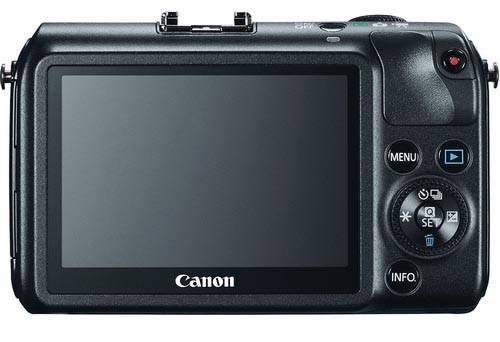
Canon EOS M Shoots Itself In The Foot

Ok. The Nikon V1/J1 hasn't been a terrible sales success. It hasn't be a failure, either, but it is far from setting the world alight like the Olympus E-M5 and Sony NEX cameras have. I think that it's philosophically wrong, but I suspect that another problem with the whole thing was the insane price.

Apparently, Canon thinks that the only problem with the V1/J1 was, in fact, the sensor! Haha! Oh, silly me! And this whole time, I thought cameras followed basic laws of consumer economics. Man. I'm glad that Canon is around to tell me what's what.

The only detail that we didn't have previously was the price. It was, considering the shape, size, quality, and reports et al., safe to assume that it was going to be cheap — more in line with the Sony NEX C3 than the 5n or 7.

Ohh, how wrong we were to assume that. Canon has done what big companies do best and woefully misjudged the market. The new EOS M will cost eight-hundred dollars with the 22m pancake lens, $1,200 with the 18-55mm kit zoom, and $1,500 with both lenses (the last two numbers converted from GBP). To whom are they selling? The only people in this price range are enthusiasts and pros — the very people who don't give a crap about sleek yet accessible styling.

This. Is. Laughable. The Olympus E-M5 will eat its lunch. Sony will barely feel it. After the initial burst of sales that any company with a huge marketing and distribution budget can manage, this camera will fall off the map. Guaranteed. I will put money on it.

UPDATE:

EOSHD posted his thoughts on the EOS M's official specs and everything is summed up pretty well in this:
There is still a very small chance that Canon have put something useful in this thing… Like a better video processor, or more resolution in 1080p, or…


No, I’m dreaming.


This is Canon.

Sunday, July 22, 2012

Canon EOS-M Mirrorless Camera Fully Leaked


As I said, I'm here to taunt Canon a second time!

Canon will officially announce the EOS-M sometime tomorrow (the 23rd) in an event in the UK. I have complete confidence that it will totally fail to set the world on fire. Ladies and gentlemen, this is what an arrogant company, artificially segmenting and differentiating its product lines, looks like! Give them a round of applause.


Seriously. I am at the point where I have nothing but contempt for Canon. They seem to have very little interest in actually innovating and pushing boundaries. Everything they have put out is either a "me-too" product, or an overpriced monstrosity aimed at a niche market. They apparently think that the non-professional market is simply stupid enough to not notice that Canon's cameras stopped competing years ago. At this point, they're just squeezing blood from the faithful.


So what are the deets, then, what's the 411, what are the specs that are sure to set aflutter the hearts of hard-core Canon fanatics and no one else come release day?

  • 18MP APS-C
  • DIGIC V Image Processor
  • 3″ 1MP Touchscreen
  • Phase & Contrast AF
  • 1920×1080 Video 30p/25p/24p
  • 1280×720 Video 60p/50p
  • MPEG-4, AVC/H.264
  • SD Card
First, we have the exact same sensor as is in Canon's current entry-level cameras, the tried and true 18MP soldier. A good sensor, to be sure, but one or two generations behind other cameras. The sensor will be paired with a single DIGIC V processor. Not bad. Not good either, but not bad.

The touchscreen is good. They are at least not skimping on that (*COUGH*Olympus!*COUGH*). At over 1MP that makes it competitive with essentially everything on the market. As far as I know, it's only bested by the (much) more expensive Fuji X Pro 1.

Yes, you read that right, phase and contrast detection autofocus. There's a reason for that, and some great commentary from EOSHD on the subject.

Everything else is competitive for what will likely be a low price. The various film modes are nice, especially the 24p at 1080 resolution. That said, Canon's video has been surpassed many times over by other cameras, and this video will likely suffer all of the same problems that current Canon cameras suffer.

Finally, the EOS-M will come with the usual assortment of consumer features like "fun" filters and a full touch screen interface that will suck. It will not come with almost anything that an enthusiast or professional may want, like physical controls, a fast shooting speed, CF cards, and large buffer.

Canon is so positively, absolutely desperate to avoid any possible cannibalization of their traditional SLR market that they are paralyzed. They cannot innovate. This is a wan response to Micro 4/3 and NEX, taking the same trajectory that Micro 4/3 failed at. What makes Canon think they can succeed? Who cares! As long as they don't eat up any sales of SLR's!

This conflict between wanting to make something good and make something that "fits" into Canon's family is best evinced in the lenses and autofocus. As I mentioned, this camera has both contrast and phase detection AF, which makes perfect sense when you see that Canon is releasing an EF lens adapter right from the get-go. This is both in response to Sony's adapter, but also yet another desperate attempt to keep people involved in the EF line of lenses whether they fucking like it or not. Too big, you say? Not enough primes, you say? Too bad!

EOSHD has an excellent point about the strategic failure of this new camera and it's lenses, and instead of paraphrasing, I'll just post it.
Focus groups keep telling camera manufacturers they want DSLR quality in a small camera.

Canon, Nikon, Olympus and Panasonic took this to mean a small DSLR with interchangeable lenses.

This pleased their accountants – there is much margin in cheap glass. Rather than sell only a body like they were doing with compacts, Sony, Panasonic and Olympus could now sell multiple lenses to the mass market for the first time not just to enthusiasts and pros.

However.

What they needed was to listen to a visionary like Steve Jobs instead, because a focus group doesn’t actually know they really want.

Sure enough it turns out that what these people really wanted was a compact camera with a massive zoom lens built in...

The 7D’s sensor went into six more cameras [after the 7D] – important ones at that. The 550D, 600D, 60D. Then the G1X which cut the size down but used the same sensor, and the 650D which used the same sensor but with a few pixels turfed off for AF sensels. Now the EOS M looks likely to use that sensor AGAIN. Effectively for the 6th time Canon is serving up the same camera in a different shape aimed at a different focus group.
I couldn't have said it better myself. It appears that Canon is so God-like as to succeed where everyone else has failed. Or perhaps they just want to succeed in Japan, where the tiny Micro 4/3 cameras have indeed found success. Or maybe Canon is just stupid. Both options seem equally likely.

As I pointed out in my posts on the Sony RX100, Sony is the one breaking new ground. And while it sometimes takes awhile to become successful, especially when entrenched players control so much ground, it eventually happens. It happened with the massive success of the NEX-7 and 5n (the latter of which is the most popular Flickr camera that Sony has) and the now world-beating success of the RX100. Let me reiterate that last point: the RX100, the most expensive P&S currently on the market, is the #1 camera on Amazon and has been for weeks.

That is huge. It beats out insanely cheap Micro 4/3 cameras, a Panasonic GX1 that's been discounted all to hell, dozens of Canon and Nikon SLR's that cost the same or much less; it confirms what I and many others have been saying for years: people do not want tiny, cheap, SLR's. They want a camera that you turn on and then press a button.

Cell phones took over that market, and instead of fighting back, companies either did nothing like Canon, released crap years late like Nikon, or they thrashed around in some blind alley for three years like Panasonic and Olympus. Don't even get me started on the still-born Pentax-Q. Only Sony stepped up the plate.

There are two markets: those who want simplicity and those who want control. Both markets want better image quality. Neither market wants these quasimodo halfway cameras. I don't understand how these camera companies don't get that.

Friday, July 20, 2012

Details Of Canon's New Mirrorless System Leak Out

Canon is readying a new mirrorless system to do battle with the likes of Sony, Fuji, and Micro 4/3. Much like the Nikon V1/J1, it appears that Canon's offering is going to be a wan piece of crap.

Early reports indicate that the camera is aiming not for Micro 4/3, but for Sony's NEX cameras, which is why Canon chose an APS-C sensor over the smaller one in the G1X. This, yet again, confirms to me that the arrogance of Canon and Nikon knows no bounds, and they don't even consider Micro 4/3 a player. Those same reports indicate the camera feels cheaply built. This means that Canon is artificially segmenting their product lines... again... and this camera line will be aimed entirely at an entry-level market. 'Cause we know how well that worked out for Micro 4/3.

Combined with the fact that Canon's sensor development has essentially stood still for the past three years --and really even longer than that if we ignore simple increases in resolution-- Canon's new system will be a non-option. For those who want an APS-C sensor, Sony will be the only logical option. And for those with even greater pro/enthusiast aspirations will certainly not be lured away from the Fuji X Pro 1.

I await more details so I am given the opportunity to taunt them a second time.

Thursday, June 14, 2012

Canon, Nikon, and Sony Are All Building Cheap Full-Frame Cameras... Why?

The Nikon D600
Oh the insanity. Photos of the supposed Nikon D600 have hit the web -no surprise, at xitech- all but confirming the existence of the cheap, full-frame camera. This combines with rumors that both Canon and Sony also have sub-$2,000 full-frame cameras in the works.

I'm sure that many people see this as shrewd behavior on the part of the entrenched players to keep their market shares secure. I think that it represents something much more pathetic... and puzzling! What this really indicates is that all of the major players in the traditional SLR industry have abandoned the APS-C market, even though it still has a great deal of interest in the enthusiast demographics. The fantastic performance of Sony's newest sensors, and the era-defining performance of the Fuji X Pro 1, confirm this.

Why do I see this as an abandonment? First, let's look at some points.
  • I was puzzled when Canon and Nikon didn't double-down on their compact, entry-level cameras in response to Micro 4/3's early success.
  • Nikon's most exciting APS-C camera is the near-entry-level D3200, with 24-thundering-megapixels. I think that this is obviously targeted at Micro 4/3.
  • Nikon's DX lenses, though, are mostly crap. Canon and Sony are similar, with their APS-C lenses playing an absolute second fiddle to the FF gear.
  • Canon and Nikon have a complete aversion to prime lenses, with their 28mm primes being some two decades old.
  • Instead of releasing an APS-C mirrorless system to compete with Sony, Nikon releases the "1" and Canon releases the G1X.
  • Canon's 7D and Nikon's D300 haven't been refreshed in three years. And in that time, not a single APS-C lens has been released.
  • Sony's been rumored to have been working on a sub-$2000 full-frame camera for some time to replace the Alpha A850.
  • Sony has announced increased development of the NEX line, with an accelerated lens release map and cameras coming out every eight months.
  • The Olympus E-M5 is a break-out hit, becoming Olympus' most popular camera on Flickr after less than a month on the market.
  • The E-M5 has made the important step of reducing the performance difference between it and the APS-C competition to a level that doesn't much matter. To achieve a significant performance increase, users would need to upgrade to FF or the X Pro 1.
  • Fuji's amazing X Pro 1 has had the enthusiast community all a twitter in ways that Nikon and Canon haven't in years. I should know, every page I post on the X Pro 1 garners hundreds (and in a few cases, thousands) of page views. My posts on Canon and Nikon: no more than a few dozen in some cases.
All of these points taken together make it seem that the major three, perhaps in response to Fuji and Micro 4/3, are relegating APS-C to the sub-$1,000 market. Anything even remotely desirable to enthusiasts will thus be full frame.

This makes no sense to me. Cheap full-frames are great, but APS-C makes more sense in almost every way for products in the sub-$2k market. People who will be interested in this price range are also people who will be sensitive to lens prices and FF lenses cost more. And if people who have the money for FF are in the market, they won't be willing to downgrade on the camera since they desire the best out of their already-expensive glass.

There are those who desire something other than absolute image quality, such as myself, and instead desire other things. This is the thing that Olympus and Panasonic seem incapable of understanding: their Micro 4/3 cameras became super-popular among enthusiasts who already had gear because they were so damned small. Some people desire discreteness and portability. A company cannot provide that with FF equipment, especially the gigantic zoom lenses that Nikon and Canon love. Micro 4/3 has obviously proven to be the best at this, but Sony has shown that APS-C can definitely give them a run for their money. And if Sony can provide more lenses to go along with their Zeiss 24mm, many pros will simply skip the low-level FF gear.

Full frame will never compete with Micro 4/3 or APS-C in size. I would wager that the Leica M9 is as compact as FF could ever go, and the M9 isn't exactly petit, nor is it light. The M9 weighs 600g with card and battery. The NEX-5n weighs 269g. The NEX-7, 353g. The Olympus E-M5 is positively porky at 425g. The Nikon D800 weighs in at 900g, while the heaviest current APS-C camera that I could find was the Sony A77 at 732g. The heaviest APS-C camera that I could find is over 160g lighter than the lightest FF camera.

I ranted about how Canon should have shifted the EOS 7D successor into the APS-H design, and perhaps they are doing this. But that was because Canon's sensors are terrible in comparison to the newest generation of Sony/Nikon/Fuji, not because I thought that APS-C was fundamentally limited.

All Canon and Nikon had to do was stop treating their APS-C camera market like second-class customers. That's it! I always thought that they should have doubled down on their compact APS-C cameras, push out some high-quality primes, and call it done. Micro 4/3 would have been effectively competed with. But, no. Instead they gave Olympus and Panasonic enough time to actually manage some semblance of market share even though both companies are run by bumbling idiots.

I'm so angry, I don't even know why I'm angry. We are getting cheap full-frame gear, which is great. I think. I think that I'm pissy because they are fragmenting the market even more. Nikon produced the stupid "1" series of cameras, and that's annoying because it means that money that could be put into the development of better APS-C and FF lenses was instead put into an over-priced, glorified, point-and-shoot intended for soccer moms.

I also find this irritating because it appears that, based on these actions, that Cankon do not treat Micro 4/3 as legitimate competition for them. Nikon sends the crippled D3200 to do battle with the GX1 and E-M5. Is the sensor better? Yes. Is absolutely everything else worse? Also yes. And by disregarding 4/3, they are by connection disregarding those who use it. We see similar arrogance in Canon creating the Cinema series of cameras and ignoring the SLR market, because who cares about filmmakers who are on a budget? Fuck'em.

Again, I give Sony credit since they are actively trying to merge their systems with the NEX adapter for their Alpha lenses. It's obvious that they are treating the compact, APS-C market as a legitimate playground for enthusiasts. They are pushing video technology forward, keeping prices down, and creating innovative, exciting products.

All companies must increase value to survive. This behavior is increasing value through price alone. They can't just say "Hey! We made a camera that's rather similar to this more expensive camera, just worse in a few key ways! But it's cheaper!" The cameras need to provide something different. That's why the far-and-away most popular Micro 4/3 camera was also the most expensive: the GF1. It cost nine-hundred-dollars when it launched in 2009. That's a lot for a camera that was pretty soundly outperformed in most ways by the competition. It immediately became a monster hit, though, because it provided something different.

DPReview even said of the GF1,
Another clue as to how much we liked the GF1 is that people in the office have actually been shelling out their own money to buy them, something almost unheard of in an office with cupboards full of all the latest cameras.
That is the power of different.

There is one way that Cankon could blow my mind: a mirrorless full-frame camera. I seriously, seriously doubt that this will happen, but it would be very cool. It would provide the power of FF, be more compact than full-sized SLR cameras, and provide whichever company produces it an excuse to actually make some decent, compact primes. A compact, FF camera for under $2,000? That would sell very well indeed, and be complimentary to existing FF hardware.

That's what I want. I want entry, middle, high, and top-pro. Complimentary segments. Currently there is chaos. These actions will inject even more chaos because NONE of the companies will be willing to back up their cheap FF cameras with good glass. And if Cankon produce some mirrorless cameras, the lenses for those will be absolute crap as well. All we'll get is more goddamned zooms.